
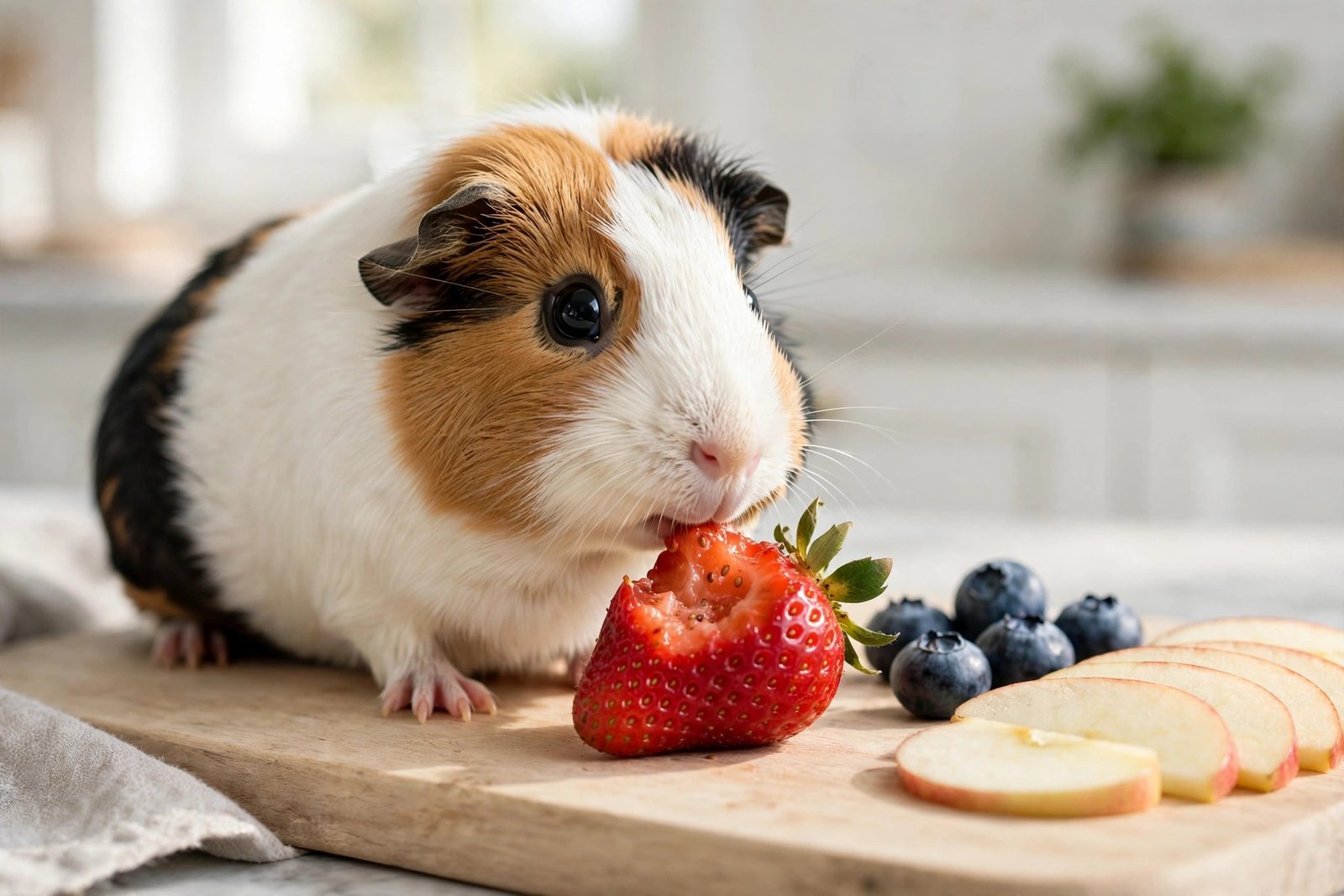
So, what fruits can guinea pigs eat? The short answer is that most common fruits are safe as an occasional treat — strawberries, blueberries, apples, bananas, oranges, watermelon and a few more — as long as the portion stays tiny and the fruit never replaces hay. Guinea pigs, also called cavies, are strict herbivores that run on unlimited timothy hay, leafy greens and a small scoop of plain pellets. Fruit is dessert, not a building block. Fruit still earns a place because guinea pigs cannot make their own vitamin C — without it they can develop scurvy, with a rough coat, sore joints and a pig that stops eating. Bell peppers and leafy greens are the reliable daily sources, but a small piece of fruit a couple of times a week adds variety and a little extra vitamin C without much risk — provided you know which fruits are safe, how much to serve and which ones to skip entirely.
Why Fruit Is a Treat, Not a Staple
The problem with fruit is sugar. Compared with vegetables, every fruit carries concentrated natural sugar. Too much fruit can feed the wrong bacteria in the cecum, the first part of the large intestine, and that can mean soft stool, bloating, diarrhoea and a cavy that fills up on treats and then ignores its hay. Vets cap fruit at under 5% of the daily diet, once or twice a week. That is the rule behind every serving size here: a piece about the size of your thumbnail. Wash everything well, remove pips, stones and tough peel, and always serve fruit fresh and ripe — never canned in syrup, dried with added sugar, jam, juice or yoghurt-coated treats. A thin slice of mango is another occasional treat that follows the same thumbnail rule. If your guinea pig turns its nose up at a new fruit, do not force it; taste varies between cavies, and some simply prefer their greens.
The 10 Safe Fruits at a Glance
Every fruit here belongs on a list of guinea pig safe foods, with the portion and frequency that keeps sugar in check.
| Fruit | Serving per guinea pig | How often |
|---|---|---|
| Strawberries | 1 small berry, or half a large one | 1–2 times a week |
| Blueberries | 2–3 berries | 1–2 times a week |
| Banana | 1 thin slice, about thumbnail size | Once a week |
| Apple | 1 thin slice, no pips | 1–2 times a week |
| Orange | 1 small segment, no peel | Once a week |
| Watermelon | 1 small cube, flesh only | 1–2 times a week |
| Tomato | 1 cherry tomato, ripe only | Once a week |
| Carrot | 1 thin coin (a vegetable, not a fruit) | 2–3 times a week |
| Pear | 1 thin slice, no pips | Once a week |
| Kiwi | 1 small slice, peeled | Once a week |
Can Guinea Pigs Eat Strawberries?
Yes — can guinea pigs eat strawberries is the question most new owners ask first, and the answer is a happy yes, in small amounts. Strawberries are one of the best fruit treats for a cavy because they carry about 58 mg of vitamin C per 100 g, plus antioxidants called polyphenols and a little fibre. Offer one small berry, or half a large one, once or twice a week. The green leafy top is safe too, and many owners find the leaves are actually the healthier part, with less sugar than the flesh. Wash the berry, leave the top on if it is fresh and clean, and remove any hard stem. That thumbnail-size rule is the easiest way to remember the portion: if the piece is bigger than your thumbnail, it is too much.
Can Guinea Pigs Eat Blueberries?
Yes, blueberries are safe and many guinea pigs love them. The question can guinea pigs eat blueberries comes up because the berries are small, dark and easy to over-serve — a whole handful looks tiny to us but is a sugar bomb for a one-kilo animal. Two or three berries, once or twice a week, is the right amount. Blueberries bring vitamin C, vitamin K and the same polyphenol antioxidants that make them a popular human snack, in a package that is soft and easy for older guinea pigs to eat. Rinse them well, serve them whole and watch the first time: a pig that wolfs them down and then has soft droppings needs a smaller portion next time. Never offer blueberry jam, muffins or yoghurt-coated berries.
Can Guinea Pigs Eat Bananas?
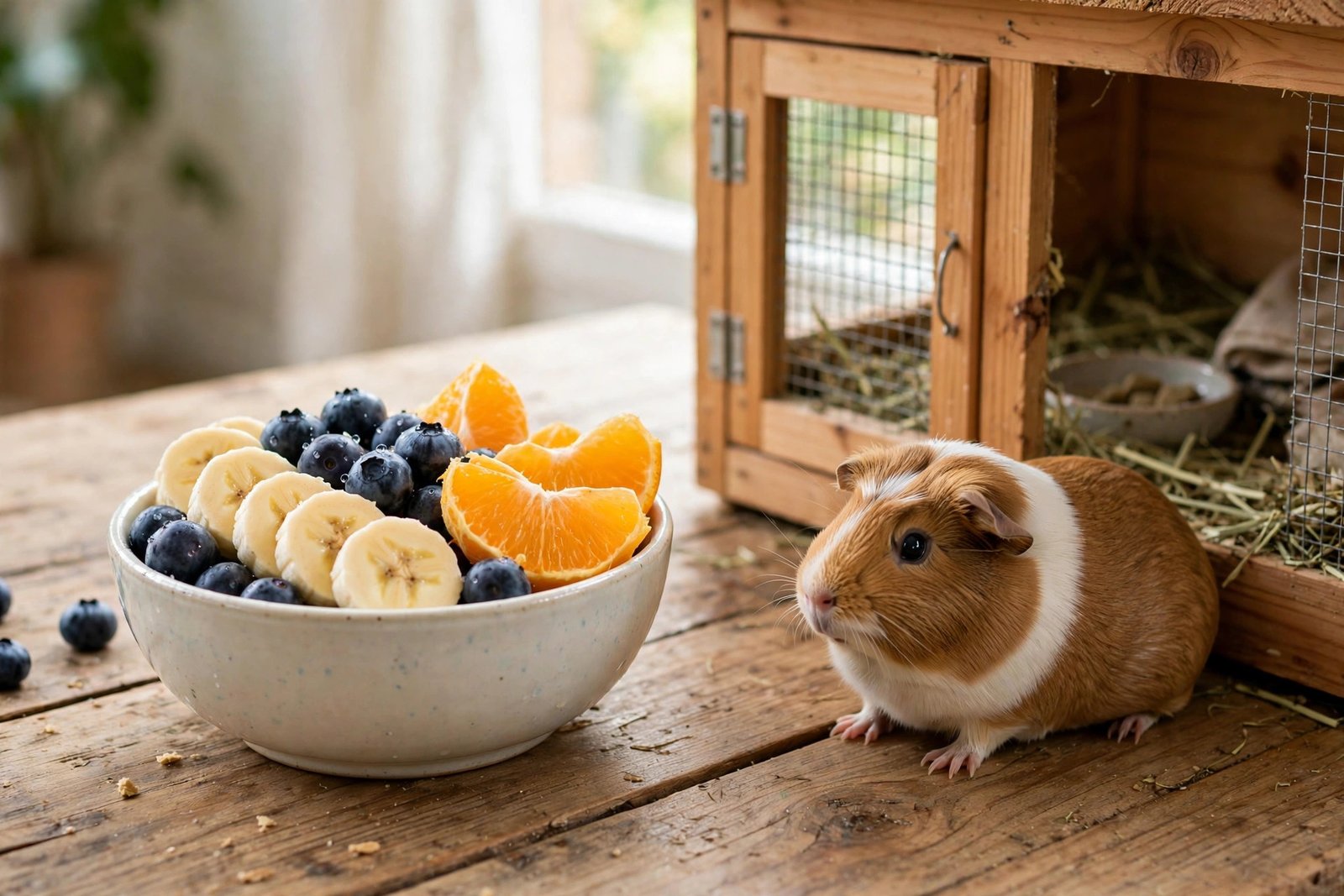
Yes, but banana is the fruit to serve most sparingly. Can guinea pigs eat bananas safely? A single thin slice, about the size of your thumbnail, once a week is fine for a healthy adult. Bananas are soft, sweet and rich in potassium, which makes them a favourite, but they are also one of the highest-sugar fruits on this list and very low in vitamin C compared with berries, so they add calories without adding much nutrition. Never offer the peel or dried banana chips, which concentrate the sugar further. If your guinea pig is already carrying extra weight, skip banana altogether and stick to berries and apple. A good test is the happy squeaks test: a cavy that wheeks for more banana is enjoying it, but enjoyment is not a reason to serve a second slice.
Can Guinea Pigs Eat Apples?
Yes — can guinea pigs eat apples is another common question, and the answer is yes, with one strict rule: never serve the pips. Apple flesh is safe, mildly sweet and a decent source of vitamin C and fibre, and one thin slice once or twice a week is a good treat. Apple pips contain amygdalin, which can release cyanide, so core the slice and throw the pips away. Peel is fine once washed, though some owners peel it for young or fussy pigs. Avoid apple sauce, juice and cider — concentrated sugar with none of the chewing benefit — and skip unripe cooking apples, which are too acidic for a sensitive gut. A slice of apple is also a useful way to tempt a guinea pig that has gone off its food after a vet visit, though any pig that stops eating needs a vet, not a treat.
Can Guinea Pigs Eat Oranges?
Yes, in a small segment once a week. Can guinea pigs eat oranges is worth asking because citrus sits in a grey area: the fruit is rich in vitamin C, which cavies need, but it is also acidic, and too much acid can irritate the mouth and upset the stomach. One small peeled segment, with the pith and peel removed, is the safe serving. Offer the segment by hand so you can see whether your pig enjoys it — some cavies love oranges, others wrinkle their noses at the sharp taste, and both reactions are normal. Never offer orange peel or orange juice. If your guinea pig has mouth sores, skip citrus until a vet has checked it. Orange has the most vitamin C per bite here, but bell pepper still beats it with less sugar — think of orange as a fun extra.
Watermelon, Tomatoes and Carrots
Watermelon is a summer favourite: can guinea pigs eat watermelon safely? Yes — one small cube of flesh, once or twice a week. It is mostly water, so it helps with hydration on hot days, but that also means it can loosen droppings if you serve too much. Remove all seeds and never serve the rind. Tomatoes need more care: can guinea pigs eat tomatoes? Only ripe red flesh, one cherry tomato once a week. Unripe green tomatoes and the leaves and stems of the tomato plant are toxic, so keep your pig away from the plant itself. Carrots are often grouped with fruit, but can guinea pigs eat carrots as a daily food? No — carrots are a root vegetable, sweet for a vegetable, and one thin coin two or three times a week is plenty. They are rich in beta-carotene and vitamin A, and the crunch is good for the teeth, but daily carrot soon adds up to too much sugar. Pear and kiwi round out the list: a thin slice of pear once a week, pips removed, and a small peeled slice of kiwi, also once a week.
5 Fruits Guinea Pigs Must Never Eat
Some fruits are genuinely dangerous, and this is the list to memorise. Avocado is toxic to guinea pigs — the flesh, skin and stone all contain persin, which can cause breathing difficulty and heart problems. Rhubarb is toxic too, leaves and stalks alike, because of its high oxalic acid content. Cherries are only dangerous because of the stone, which contains cyanide compounds like apple pips, so never offer a whole cherry. Dried fruit with added sugar, jam, canned fruit in syrup and juice are all out: concentrated sugar, no fibre, and hard on teeth and gut. Finally, any fruit that is mouldy, fermented or starting to rot is unsafe, even if it was safe when fresh — mould toxins can make a small animal very ill very fast. If your guinea pig eats any of these, remove what is left, watch for shaking, hiding, drooling or a refusal to eat, and call an exotic vet the same day.
How to Introduce a New Fruit in 7 Days
New foods should be introduced slowly, because a guinea pig’s gut bacteria need time to adjust. Day 1 and 2: offer a piece half the normal size — a single blueberry or a sliver of apple — and watch the droppings for 24 hours. Day 3 and 4: if droppings are normal, offer the full thumbnail-size serving. Day 5: rest day, no fruit, hay and greens only. Day 6: offer the fruit again at the full serving and watch for soft stool. Day 7: if all is well, the fruit joins the weekly rotation at its normal frequency. Introduce only one new fruit at a time, so if something upsets the stomach you know which fruit caused it. Keep a small note of what you offered and when, so you can spot patterns instead of guessing from memory.
Who Should Skip Fruit Altogether
Most healthy adult guinea pigs can enjoy the fruits in this guide, but some should skip fruit until a vet says otherwise. Baby guinea pigs under six months have developing digestive systems and should stick to hay, pellets and greens. Overweight cavies and any pig with diabetes should avoid fruit sugar entirely. Guinea pigs with bladder stones or a history of urinary sludge need care with calcium and oxalic acid, so ask your vet about fruit choices. And any pig with diarrhoea, bloating or a recent course of antibiotics should have fruit paused until the gut settles. When in doubt, the safest treat is a bell pepper strip or a fresh herb leaf — all the vitamin C, almost none of the sugar.
Frequently Asked Questions
What fruits can guinea pigs eat every day?
None. Fruit is a treat, not a daily food — bell peppers and leafy greens are the daily vitamin C sources, and fruit belongs on the menu once or twice a week.
Can guinea pigs eat strawberries every day?
No. One small strawberry once or twice a week is the right amount. Daily strawberries add too much sugar and can cause soft droppings and weight gain.
Can guinea pigs eat blueberries and bananas together?
Yes, but count them as one serving, not two — do not serve a full portion of each on the same day.
Are apple pips really dangerous for guinea pigs?
Yes. Apple pips contain amygdalin, which can release cyanide. Always core apple slices and throw the pips away before serving.
What should I do if my guinea pig gets diarrhoea after fruit?
Stop all fruit, offer unlimited hay and water, and keep the pig warm and dry. If droppings do not firm up within a day, or the pig stops eating, see an exotic vet promptly.
