
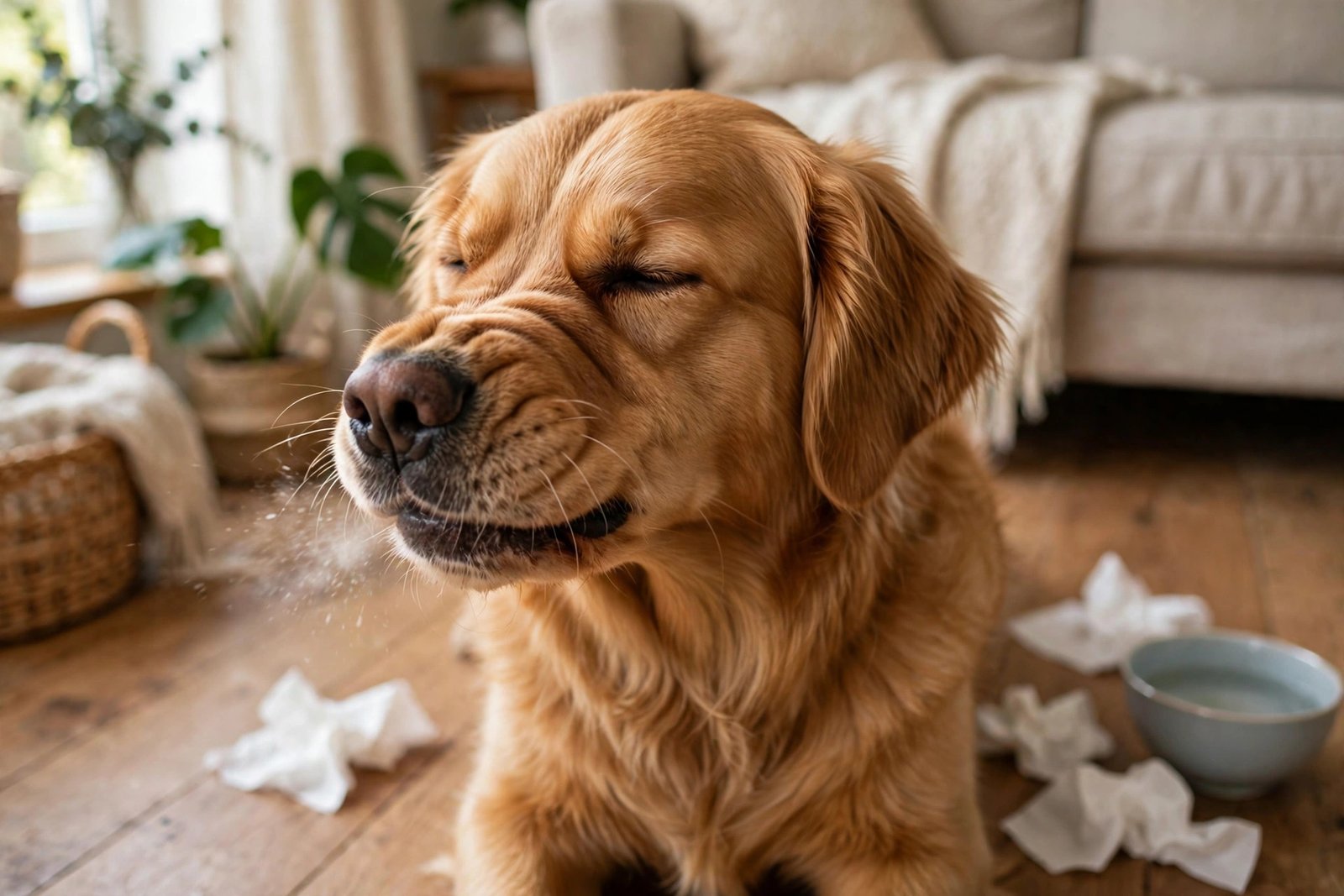
If your dog has been sneezing all day, you are probably asking the same question every owner asks: why does my dog sneeze so much? A sneeze now and then is just a nose clearing itself. But when the sneezes keep coming — a dozen in an hour, or every day for a week — the pattern is telling you something. Most causes are simple and fixable at home; a smaller number need a vet.
This guide covers the nine most common dog sneezing causes, explains the honking sound called reverse sneezing, and shows how to sort a harmless bout from a real problem: which nostril, what the discharge looks like, and how your dog behaves between sneezes.
Is Sneezing Normal for Dogs?
Yes, in small doses. Dogs explore the world nose-first, so dust, grass and pollen reach their nasal passages all day, and a sneeze blasts that debris back out. A healthy dog might sneeze a couple of times after a walk, then carry on as normal.
It stops being normal when sneezing is frequent, forceful, or paired with other symptoms. Dog sneezing a lot — several bouts a day, every day, or fits that leave your dog pawing at his face — deserves a closer look. If you are wondering why is my dog sneezing more than usual, the cause is usually one of the nine below.
| Pattern | Usually means | What to do |
|---|---|---|
| A few sneezes, then normal | Dust, excitement, play | Nothing — just watch |
| Sneezing fits every day | Allergy, irritant, or infection | Work through the causes below |
| Sneezing from one nostril only | Something stuck, or a tooth problem | Same-day vet visit |
| Sneezing with blood | Injury, infection, or nasal mites | Vet today, sooner if heavy |
| Honking snorts, neck stretched | Reverse sneezing | Usually harmless; see the check below |
Why Does My Dog Sneeze So Much? 9 Causes
1. Allergies to pollen, dust and mould
Allergies are the most common reason a dog keeps sneezing. Pollen, dust mites in bedding, and mould spores in damp rooms all irritate the lining of the nose. The classic sign is seasonal sneezing, often with watery eyes and an itchy face. Washing bedding weekly in hot water and wiping paws after walks cuts the allergen load noticeably.
2. Household irritants: smoke, sprays and scented products
A dog’s nose is far more sensitive than ours, so things we barely notice can set off a sneezing fit: cigarette smoke, air fresheners, scented candles, cleaning sprays, plug-in diffusers and strong perfumes. If the sneezing starts in one room — often the kitchen after cleaning — an irritant is the likely culprit. Air the room out and switch to unscented products where your dog sleeps.
3. Reverse sneezing — the honking that sounds like choking
This is the cause that frightens owners most, because it looks dramatic. During a reverse sneeze the dog stands still, stretches his neck, and makes loud, rapid snorting breaths in through the nose. It can sound as if he is choking, but it is a reflex spasm of the soft palate that pulls air in instead of pushing it out. Most episodes last a few seconds to about a minute, and the dog is completely normal before and after.
So why is my dog reverse sneezing so often? Triggers are excitement, pulling on a collar, eating or drinking too fast, and dusty air. Small and flat-faced breeds — Pugs, Shih Tzus, Bulldogs and French Bulldogs — are the most prone. Occasional episodes are harmless; frequent ones, or ones that start out of the blue, deserve a vet check.
4. Upper respiratory infections and kennel cough
Infections of the nose, throat and airways are a frequent cause of heavy sneezing, especially in dogs that mix with other dogs at daycare or the park. Kennel cough often brings sneezing together with a dry, honking cough, a runny nose, watery eyes and tiredness. Dog sneezing and coughing together is the pattern to watch: a sneeze alone is often harmless, but sneezing plus coughing, fever or lethargy points to an infection that needs a vet, and to keeping your dog away from other dogs until it clears.
5. Something stuck up the nose: grass seeds and foxtails
A grass seed or foxtail can lodge in one nasal passage and refuse to come out. The signature is sudden, violent, repeated sneezing that starts during or just after a walk, usually with frantic pawing at the nose, head shaking, and discharge — sometimes with a little blood — from one nostril only. This needs same-day attention: a lodged seed travels further in with every sneeze. Never try to fish it out yourself; a vet removes it with a small camera exam.
6. Nasal mites
Nasal mites are tiny parasites that live in a dog’s nasal passages and sinuses. They cause frequent sneezing, a runny nose, nose rubbing and sometimes nosebleeds, and they spread between dogs. Mites cannot be seen without a scope, so the diagnosis comes from your vet. Sneezing with head shaking and a nose that will not stop running puts mites on the shortlist.
7. Dental disease and tooth-root abscesses
This one surprises most owners. The roots of a dog’s upper teeth sit very close to the nasal passages, so an infected tooth or a tooth-root abscess can drain into the nose and cause one-sided sneezing and discharge. The clue is the side: sneezing and a smelly discharge from one nostril, sometimes with a swollen face. A vet will check the teeth under sedation if this pattern fits.
8. Play sneezing — a deliberate signal
Not every sneeze is a symptom. Dogs sneeze deliberately during rough play as a calming signal — a way of saying “this is still a game.” Play sneezes are short, soft, and happen mid-wrestle or mid-chase, with a loose, happy body. If your dog only sneezes when playing and is otherwise perfectly well, that is communication, not illness.
9. Breed shape and age
Flat-faced breeds sneeze more because their shortened airways are easily irritated. Small toy breeds are also over-represented in reverse sneezing. In older dogs, new, one-sided, persistent sneezing needs a closer look: it can point to a nasal tumour or polyp.
Sneeze, Reverse Sneeze or Cough? How to Tell Them Apart
A normal sneeze blasts air out through the nose. A reverse sneeze pulls air in with a honking snort, neck stretched. A cough comes from the chest and sounds like a hack.
| Sound | What it looks like | Usually harmless? |
|---|---|---|
| Normal sneeze | Quick outward blast, head dips | Yes, unless frequent or bloody |
| Reverse sneeze | Honking snorts inward, neck stretched, stands still | Usually, if brief and rare |
| Kennel-cough cough | Dry honking hack, sometimes gagging up foam | Needs a vet |
| Collapsing-trachea cough | Harsh dry goose honk, small breeds, worse with excitement | Needs a vet |
If you are unsure what you are seeing, film an episode on your phone and show your vet — a 20-second video beats any description.
Dog Sneezing Blood: When to Act Fast
Dog sneezing blood looks alarming, and it should be taken seriously — but the urgency depends on the amount and the company it keeps. A few pink-tinged drops after a hard sneezing fit can come from a small burst vessel in an irritated nose. Heavy bleeding, blood from one nostril that keeps coming, or blood paired with facial swelling, lethargy or laboured breathing needs a vet the same day. Common causes are a foreign body, nasal mites, an infection, or a knock to the nose. Keep your dog calm and still, do not put anything up the nose, and note which nostril the blood comes from.
How to Stop Dog Sneezing at Home
Once the serious causes are ruled out, a few simple steps often calm the sneezing down. This is how to stop dog sneezing that comes from everyday irritants and mild allergies — it is not a substitute for vet care when red flags are present.

- Clear the air. Open windows, stop using air fresheners and scented candles in the rooms your dog uses, and keep cleaning sprays away from his bedding and bowls.
- Wash bedding weekly and vacuum with a filter that traps fine dust. Dust mites are a year-round trigger, and clean bedding is the cheapest fix there is.
- Wipe paws and muzzle after walks to remove pollen and grass seeds before they are sniffed indoors.
- Swap the collar for a harness if leash pulling sets off sneezing fits. A harness takes pressure off the throat, and in many dogs that alone cuts reverse-sneezing episodes sharply.
- Never give human allergy or cold medicines unless your vet advises it. Some contain ingredients that are dangerous to dogs, and the wrong dose can do real harm.
If the sneezing does not ease within a week, or it keeps coming back, the cause is probably medical — time for a vet visit.
The 60-Second Calm-Down for Reverse Sneezing
If your dog is in the middle of a reverse-sneezing episode, stay calm — your dog takes his cue from you. Most episodes stop on their own within a minute, but these steps may shorten one: speak softly and keep your hands slow; gently stroke or massage his throat, since the swallowing this triggers often ends the spasm; briefly cover one nostril for a few seconds with a fingertip, which makes him swallow (never block both nostrils); and offer a small drink of water or something to lick.
Dog reverse sneezing treatment is rarely about medicine: for occasional episodes, no treatment is needed at all. When episodes are frequent, the vet treats the underlying cause — allergies, nasal mites, or an infection. If episodes persist, the vet may suggest X-rays or a camera exam of the nose.
When to Call the Vet
Book a routine vet visit if the sneezing is new and daily, has lasted more than a week, if your dog has gone off his food, or if the discharge has turned thick, yellow-green, or smelly. Go the same day if you see blood that will not stop, one-sided discharge with facial swelling, blue or grey gums, collapse, or a dog that cannot settle or breathe comfortably. Puppies, flat-faced breeds and older dogs get seen sooner, because they have less reserve when breathing is affected. Keep a short note of when the sneezing happens, which nostril, and what your dog was doing just before — patterns like “always after the park” often hand the vet the answer.
Frequently Asked Questions
Why does my dog keep sneezing every day?
When a dog keeps sneezing day after day, the cause is usually ongoing — an allergy, a household irritant, or a low-grade infection. Check the room air, the bedding, and the season first. If it lasts more than a week, book a vet visit.
Why is my dog sneezing and coughing at the same time?
Sneezing plus coughing usually means the nose and the airways are irritated together, most often by kennel cough or another upper respiratory infection. Keep your dog away from other dogs and call the vet.
Is reverse sneezing dangerous?
Usually not. A short honking bout that ends on its own, with pink gums and a dog that is normal straight after, is generally harmless. It becomes a concern when episodes are frequent, start suddenly in an older dog, or come with discharge or trouble breathing.
How long does a reverse sneezing episode last?
Most last a few seconds to about a minute. If an episode runs longer than a minute or repeats back to back, treat it as urgent and call the vet.
The Short Version
Most dogs sneeze because something irritated their nose — pollen, dust, smoke, or a bit of grass — and a few sneezes a day are completely normal. What matters is frequency, which nostril, and what comes with it: daily sneezing needs a cause found, one-sided sneezing or blood needs a vet the same day, and a brief reverse sneeze is usually harmless. Clear the air at home, swap the collar for a harness, and film an episode for your vet.
