
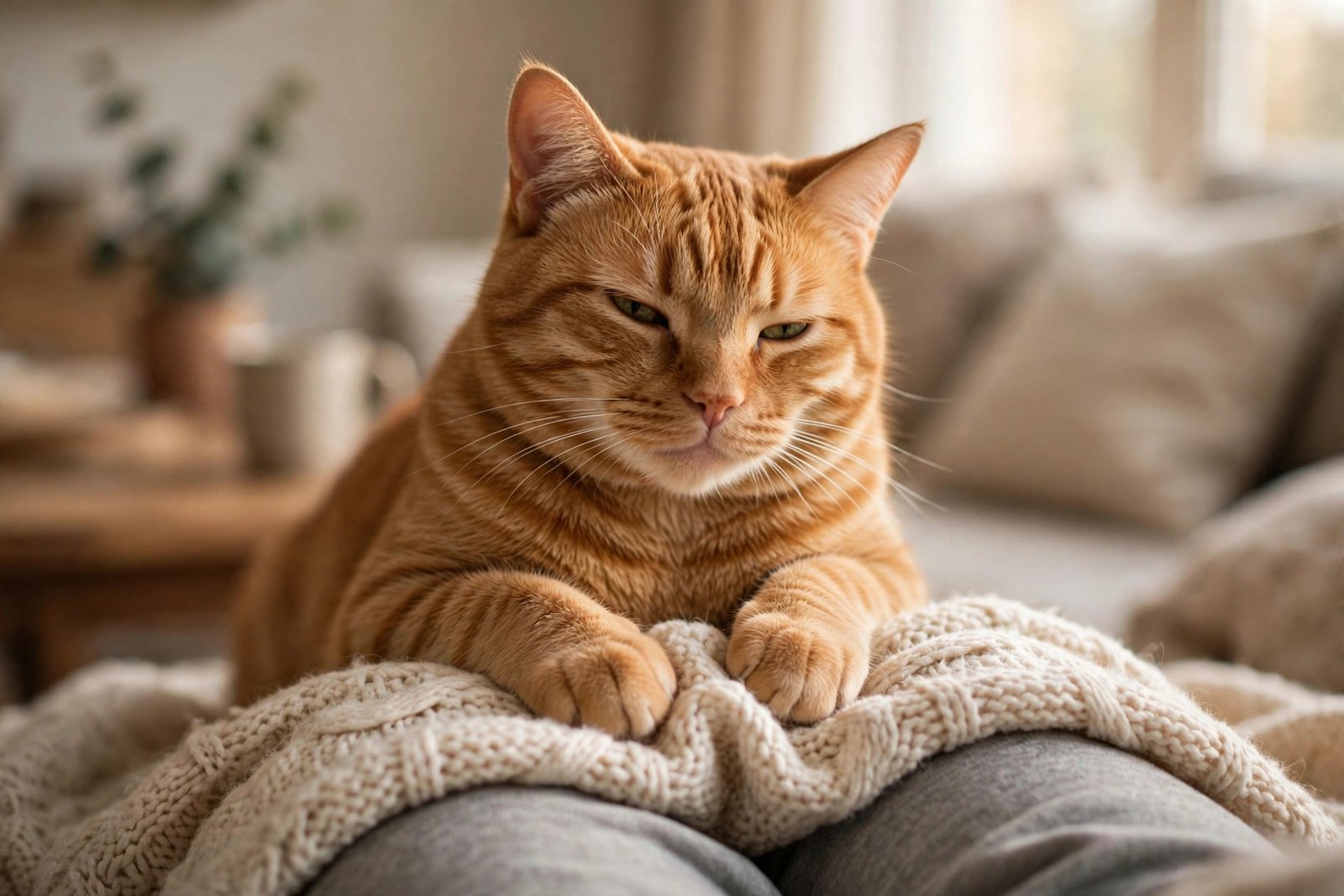
Your cat climbs onto your lap, settles in, and starts pressing its front paws into you one after the other, like it is kneading dough. Owners call it “making biscuits” — and if you have ever wondered what it means, the short answer is good news. The cat kneading meaning is almost always comfort: your cat feels safe, relaxed, and happy with you. But there is more going on under those paws, and the spot your cat chooses changes what it is saying.
The Short Answer: What Is Cat Kneading?
Kneading is the rhythmic, alternating push of a cat’s front paws into a soft surface — a blanket, a cushion, your lap, or your stomach. The motion looks exactly like a baker working dough, which is where the nickname “making biscuits” comes from. Kittens are born knowing how to do it: a newborn presses its mother’s belly while nursing, and that pressure helps milk flow. The behaviour is wired in from day one, which is why cats weaned long ago still do it as adults. It is normal, healthy behaviour — and one of the clearest windows into how your cat is feeling.
7 Reasons Your Cat Kneads You
There is rarely a single reason: most sessions mix two or three of these, and the mix shifts with the moment — a sleepy evening knead differs from an excited greeting one. Here are the seven reasons behind nearly every session, including why does my cat knead me when I sit down to watch television.
1. Comfort From Kittenhood
This is the root of it all. A nursing kitten kneads its mother’s belly to stimulate milk, and the warm, safe feeling of nursing gets linked to the motion for life. Adult cats return to it when they feel that same safety — on a warm lap, in a sunny spot, or tucked against their favourite person. It is a self-soothing habit carried over from the first weeks of life, and it is why kneading so often comes with half-closed eyes and a slow blink. Cats weaned early tend to knead more, sometimes while suckling a blanket, because the comfort link runs deeper for them.
2. Affection and Bonding
Kneading on a person is one of the warmest signs of affection a cat can offer. When your cat picks your lap over the sofa, it is choosing your warmth, your scent, and your company — and the kneading is part of settling in with someone it trusts. This is the heart of why do cats knead their owners: the cat is treating you the way it once treated its mother, as a safe, familiar figure. It is not quite a human hug, but in cat language it is very close — add a slow blink and a headbutt, and you have a cat thoroughly pleased to be with you.
3. Marking You as Theirs
Cats carry scent glands between their paw pads, and every press of a kneading paw leaves a trace of their scent behind. When your cat kneads you, it is quietly marking you as part of its territory, telling other cats this person belongs to its social group. The same glands are why cats rub their cheeks on furniture and doorframes. It sounds possessive, and gently it is: your cat is claiming you, and only does so when it feels secure enough to announce the bond.
4. Getting Ready for Sleep
Wild cats knead grass and leaves to flatten a comfortable sleeping spot, and house cats kept the habit. Watch your cat before a nap: it circles, kneads the blanket a few times, then curls up exactly where it pressed — testing the softness the way you might fluff a pillow. If your cat kneads your lap and then falls asleep on it, take it as a compliment: it has just chosen you as its bed.
5. Stress Relief and Self-Soothing
Cats knead when they are anxious, too. A visit to the vet, a new guest in the house, or a loud thunderstorm can all trigger a kneading session, because the rhythmic motion is calming — much like a person fidgeting with a pen or taking slow breaths. Kneading releases feel-good chemicals in the brain, including dopamine, which lowers tension. If the kneading starts right after something stressful, your cat is not asking for attention; it is calming itself down. Give it space and let the rhythm do its work.
6. Kneading and Purring Together
Why do cats knead and purr at the same time? Because the two behaviours share the same emotional root: contentment. Purring is a low, continuous vibration cats produce when relaxed — or sometimes when seeking comfort — and it often switches on the moment kneading starts. The pair together is the strongest signal your cat can give that it feels safe. Occasionally a cat purrs while kneading at the vet or after a fright — the self-soothing side of purring. Read the rest of the body language: soft eyes and loose whiskers mean happiness; flattened ears or a twitching tail mean the purring is comfort-seeking, not joy.
7. It Feels Good — Stretching and Muscle Relief
Kneading is also, quite simply, a good stretch. The push-and-release motion works the forelegs, shoulders, and toes, and cats often knead after a long sleep, the way you stretch your arms after waking. Older cats knead more gently, while young cats can be surprisingly forceful. Some experts think it also keeps the claws in working order, extending and retracting them against a soft surface. Whatever the mix, a cat that kneads is a cat using its body the way nature designed it to.
What Your Cat Is Kneading On Tells You
The surface matters. The same motion means something slightly different depending on where those paws land, and owners ask most about three surfaces: why do cats knead on you, why they choose a blanket, and why the stomach is so popular.
| What your cat kneads | What it usually means |
|---|---|
| Your lap | Trust and affection — you are the chosen resting spot |
| A blanket or cushion | Comfort and sleep preparation — softness invites the behaviour |
| Your stomach or chest | Warmth and closeness — the softest, warmest surface available |
| Thin air, nothing at all | Excitement or deep contentment — some cats knead the air when greeted |
Why do cats knead blankets so much more than hard surfaces? Because softness is the trigger: a fluffy throw or knitted jumper feels like a mother’s belly or a nest, and the texture invites the paws. That is also why cats prefer your lap to the chair arm — you are warm, soft, and smell like home. Why do cats knead on you instead of the bed beside you? You are the warmest, safest surface in the room, and the kneading doubles as scent-marking. And why does my cat knead my stomach in particular? Because it is soft, warm, and close to your heartbeat — many cats head straight for it when they want maximum comfort.
Does Kneading Mean My Cat Loves Me?
Almost — but it is worth being precise. Kneading means your cat feels safe, content, and bonded to you, which is the closest thing to love in a cat’s emotional toolkit. It is not a calculated declaration; it is instinct that surfaces when a cat is at ease. The honest version: a kneading cat is a cat that trusts you completely, and trust is the foundation of the whole relationship. If your cat kneads you, purrs, and then falls asleep, you have the answer in front of you — no translation needed.
When Kneading Hurts: The Claw Fix
The only real problem with kneading is the claws. A happy cat pressing sharp claws into bare skin hurts, and many owners flinch or push the cat away — which confuses a cat that was only showing affection. Never punish kneading: scolding teaches the cat to fear you, not to stop. Use this routine instead.
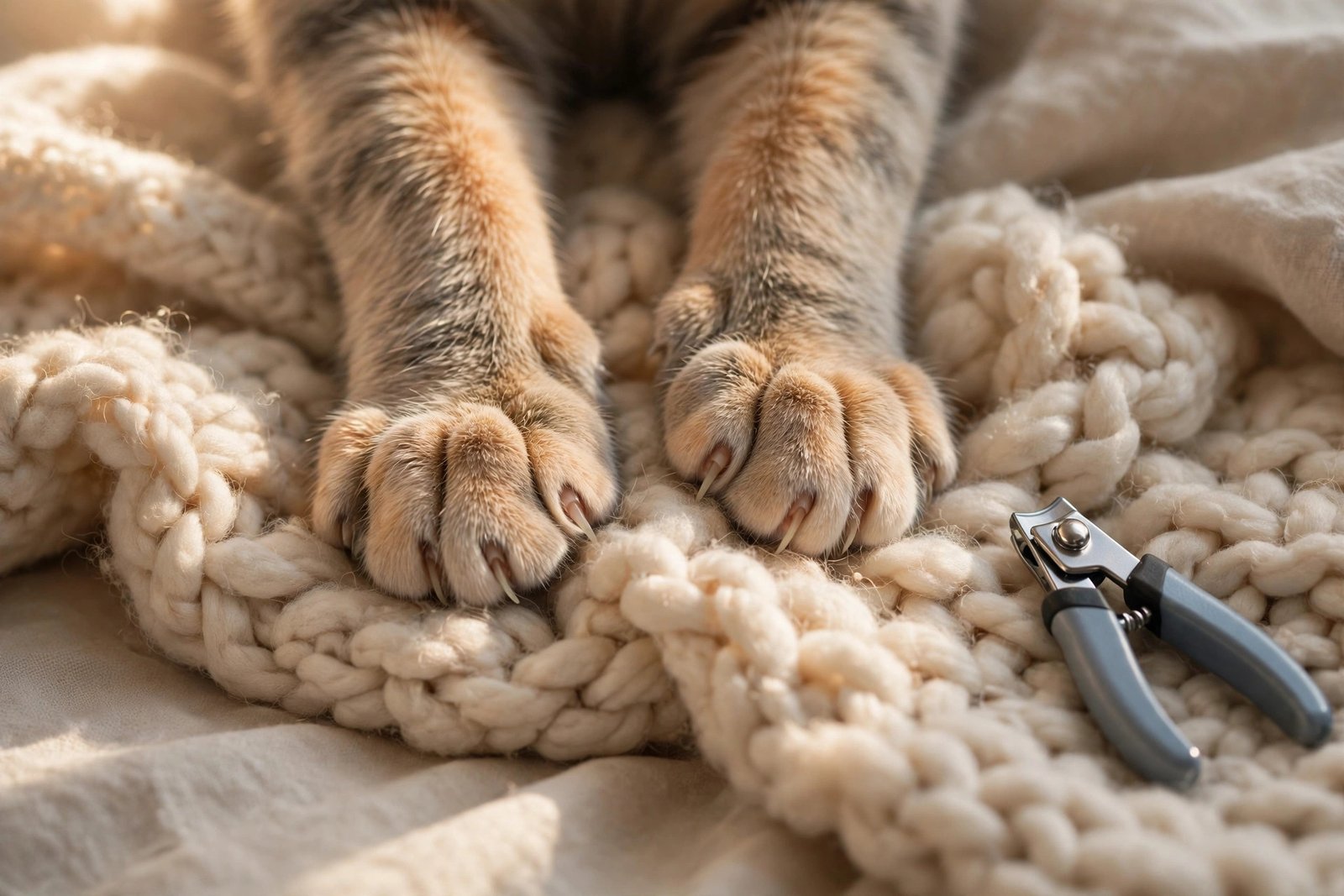
First, keep a thick folded blanket on your lap whenever the cat settles in — the fabric takes the claws and the cat keeps its ritual. Second, trim just the tips of the front claws every two to three weeks with proper pet nail clippers, taking off only the sharp hook and never cutting into the pink quick. If you are unsure, ask your vet or groomer to show you once — after that it takes two minutes. Third, if the claws come out mid-session, gently place a hand under the paws or slide the blanket between paw and skin rather than shoving the cat off. Fourth, give the cat an approved kneading spot — a soft blanket on the sofa arm or a cushion beside you — and praise it calmly when it uses it. Within a week or two most cats redirect happily, and your legs stay scratch-free.
When to Worry: Kneading That Needs a Vet
Kneading is healthy almost all the time, but a few patterns deserve a vet visit. Watch for kneading that has suddenly become constant or compulsive, especially with sucking on blankets or fabric for long stretches — in some breeds, notably Siamese and Birman cats, this can become a compulsive habit linked to stress or early weaning. Also watch for kneading paired with drooling, pawing at the mouth, limping, or refusing to use a paw, which can signal pain or a sore claw. And if a cat that never kneaded suddenly starts doing it all the time alongside other signs of illness — hiding, not eating, a dull coat — mention the change at the next check-up. A sudden change in any long-standing habit is always worth noting, even when the habit itself is harmless.
Frequently Asked Questions
Why does my cat knead me every time I sit down?
Because sitting down makes you the perfect warm, soft, still surface — and because your cat associates you with safety. The answer is the same as the cat kneading meaning in general: contentment, bonding, and a little territory-marking, all at once.
Why do cats knead blankets and not the floor?
Softness triggers the behaviour. Why do cats knead blankets comes down to texture: a blanket feels like a nest or a mother’s belly, while a hard floor gives the paws nothing to press into. The same cat that ignores the floor will knead a jumper the moment you leave it on the bed.
Why does my cat knead my stomach when I lie down?
Your stomach is warm, soft, and rises and falls with your breathing — the closest thing in the house to kittenhood comfort. Why does my cat knead my stomach has the same answer as kneading anywhere warm: your cat wants the cosiest spot available, and claims it with scent from its paw pads.
Why do cats knead and purr at the same time?
Why do cats knead and purr together is simple: both are comfort behaviours that switch on when a cat feels safe. The purring often starts seconds after the kneading, and the pair is the clearest signal of a relaxed, happy cat. If the purring sounds strained or the ears are flat, the cat may be self-soothing after stress instead.
Do all cats knead?
No — and that is normal. Some cats knead daily, some only as kittens, and some never knead at all. Cats show comfort in their own ways: slow blinks, headbutts, or simply sleeping pressed against you. What matters is the overall pattern: a relaxed body and a steady routine.
A cat kneading on your lap is doing something it has done since its first day of life — and choosing you as the place to do it. That is the whole cat kneading meaning in one sentence: comfort, trust, and a bond that goes back to kittenhood. Keep a thick blanket handy, keep the claws trimmed, and let the biscuits keep coming.
