

Can puppies eat mango? Yes — once your puppy is eating solid food, usually from about 8 weeks old, a tiny piece of ripe, peeled, pitted mango is a safe occasional treat. The soft yellow flesh is non-toxic to dogs, and the American Kennel Club lists mango among the fruits dogs can safely eat. But the answer comes with conditions: only the flesh, only in small pieces, and only in small amounts. The skin and pit must never reach your puppy.
Can Puppies Eat Mango? The Short Answer
Can puppies eat mango safely? Yes, puppies can eat mango once they are reliably eating solid food, which for most pups happens at around 8 to 12 weeks of age. Before that, fruit of any kind is too early. For a first taste, offer a single small piece — no bigger than your thumbnail — of ripe mango flesh, peeled and with the pit completely removed. Then wait a full day before offering any more. Puppies have sensitive stomachs, and mango is a sugary fruit, so even a healthy pup can get a loose stool from too much too soon. Mango is a treat, never a meal: treats should stay under 10% of daily calories.
Is Mango Safe and Good for Dogs?
Is mango safe for dogs? Yes. The ripe flesh is non-toxic, and both the American Kennel Club and the ASPCA describe mango flesh as safe for dogs when it is prepared properly: peel it, remove the pit, and serve it in small pieces as an occasional treat. Owners also ask can dogs eat mangoes dried or frozen — covered below. That safety rating applies to the flesh only. The tough skin is hard to digest and can cause stomach upset, while the large, hard pit can lodge in the throat or gut and sometimes needs surgery to remove. It also holds a trace of amygdalin, which can release cyanide if the pit is cracked open — though the choking danger matters more.
Is mango good for dogs nutritionally? In moderation, yes. Mango is one of the better fruit sources of beta-carotene, which the body converts into vitamin A, and it delivers vitamins C and E, which act as antioxidants, plus vitamin B6, potassium, and fibre. The catch is the sugar: a cup of mango pieces carries roughly 99 calories and about 23 grams of natural sugar. That is why mango works best as a small, occasional reward.
When Can Puppies Eat Mango? An Age-by-Age Guide
At 8 to 12 weeks, once your puppy is weaned and eating solid puppy food reliably, a single tiny piece of peeled mango flesh is fine as a first taste. Cut it very small — puppies gulp. Offer it on its own, not alongside another new food, so that if a loose stool appears you know exactly what caused it. At 3 to 6 months, most puppies handle new foods better, and you can move to two or three small cubes, a couple of times a week. This is also peak teething time, which makes frozen mango a genuinely useful tool. At 6 to 12 months, older puppies can handle the small-dog or medium-dog portions in the chart below, depending on their weight.
Mango Portions for Puppies by Size
Mango falls under the 10% rule that most veterinarians and the American Kennel Club recommend: treats of all kinds should make up no more than 10% of your puppy’s daily calories.
| Puppy size | Weight | Fresh mango (peeled, pitted) as an occasional treat |
|---|---|---|
| Toy breeds | Under 10 lbs | 1 to 2 tiny pieces (about 1 teaspoon) |
| Small | 10 to 25 lbs | 2 to 3 small pieces (about 1 tablespoon) |
| Medium | 26 to 50 lbs | A few small cubes (about 2 tablespoons) |
| Large | 51 to 90 lbs | A small handful (about 1/4 cup) |
Serve mango only once or twice a week. A single piece is the right first serving at any size — wait 24 hours, check the stool, and only then move up to the chart amount.
How to Prepare Mango for a Puppy
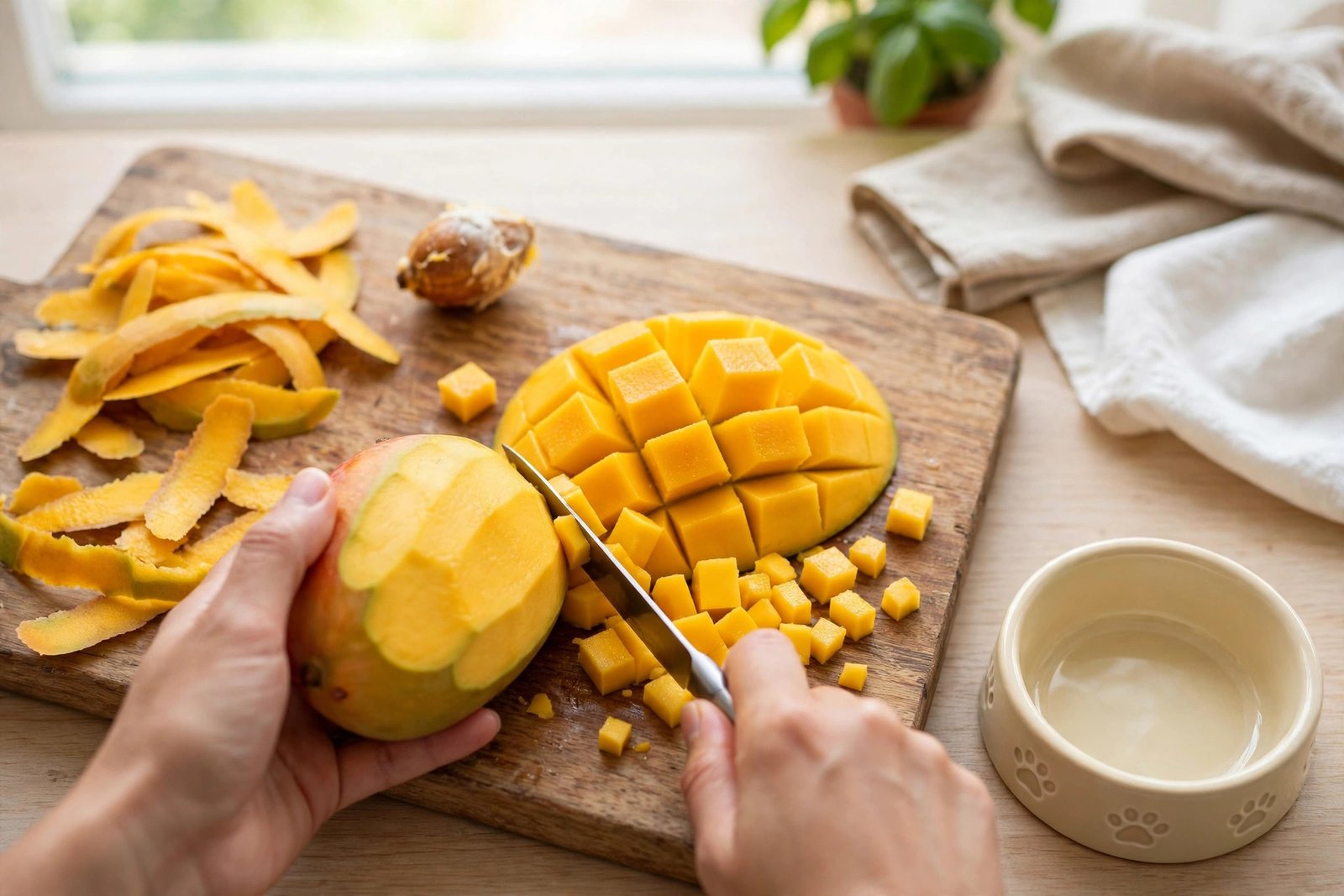
Can dogs have mango straight off the fruit? No — preparation is the whole safety story. Choose a ripe mango that gives slightly when pressed and smells sweet at the stem end; an unripe mango is hard, sour, and more likely to upset a puppy’s stomach. Peel it completely, because mango skin is tough and fibrous and contains urushiol — the same irritating compound found in poison ivy. Then cut the flesh away from the pit: stand the mango on its end, slice down each side of the flat, oval pit, score the flesh in a criss-cross pattern — the classic hedgehog cut — and push the skin side up so the cubes pop out. Throw the pit straight into a closed bin. Finally, dice the cubes down to puppy-size pieces — pea-sized for a toy breed, thumbnail-sized for a larger puppy — and serve them plain, with no sugar, honey, or sweeteners, and never canned mango in syrup or sugar-free products that may contain xylitol.
Can Dogs Eat Mango Skin?
Can dogs eat mango skin safely? No. Mango skin is not classed as toxic, but it is tough, fibrous, and difficult for dogs to digest, so it can cause stomach upset, vomiting, or diarrhoea. A large piece could also become a choking or blockage risk in a small dog, and the urushiol in the skin can irritate the mouth or skin of a sensitive puppy. If your puppy grabs a small bit of skin, it will most likely pass without trouble — offer water, hold off on more food for a few hours, and watch for vomiting or diarrhoea.
The Mango Pit: The One Part That Is Never Safe
The pit is the most dangerous part of a mango, and it should never be given to a dog of any age. It is large, hard, and fibrous, so it can lodge in the throat and cause choking or, if swallowed, get stuck in the stomach or intestines and cause a blockage that often needs surgery to remove. This danger is greatest for small dogs and puppies. If your puppy gets hold of a pit, stay calm and check for choking first. If your puppy is pawing at the mouth, gagging, drooling heavily, or struggling to breathe, treat it as an immediate emergency and head to the nearest emergency vet. Do not try to make your puppy vomit unless a veterinarian tells you to — a hard pit can cause more damage coming back up. Then watch for blockage signs over the next 24 to 72 hours: repeated vomiting, no bowel movement, a painful belly, or lethargy. When in doubt, call your vet or the ASPCA Animal Poison Control Center.
Can Dogs Eat Dried Mango?
Can dogs eat dried mango? Only sparingly, and many brands are best skipped entirely. Drying removes the water and shrinks the fruit, which concentrates the sugar dramatically, and commercial dried mango is often sweetened with extra sugar and preserved with sulfites. Some fruit snacks even contain xylitol, an artificial sweetener that is highly toxic to dogs. If you offer dried mango at all, choose an unsweetened, sulfite-free product, read the label carefully, and give only a tiny piece. Freeze-dried mango with nothing added is a better choice — but fresh or frozen mango is still the safest option for a puppy.
Frozen Mango for Teething Puppies
Frozen mango is one of the best ways to serve this fruit to a puppy, especially during teething. Freezing does not change the safety of the fruit, and a cold, firm mango chunk makes a refreshing, longer-lasting treat that can also soothe sore gums. The same rules still apply: use peeled, pitted, plain mango with no added sugar or syrup, and keep the portion within the chart above. For small puppies, cut frozen pieces small enough to chew safely so a hard chunk does not become a choking hazard. Easy ways to serve it include plain frozen chunks, mango purée frozen in silicone moulds, or pieces blended with plain yoghurt and frozen.
What Fruits Can Puppies Eat? Mango vs Other Puppy-Safe Fruits
What fruits can puppies eat besides mango? Rotating fruits is a smart way to keep treats interesting while spreading the sugar load. The same rules apply to every fruit: introduce one new fruit at a time, start with a tiny piece, wait 24 hours, and keep portions inside the 10% treat budget. Blueberries are lower in sugar than mango and packed with antioxidants — a great everyday fruit for puppies. Read our post on whether can dogs eat blueberries safely and how many to serve. Watermelon is mostly water, so it is one of the lowest-sugar fruits you can offer — always remove the seeds and rind first, as our guide to can dogs eat watermelon explains. Banana is another popular choice, though it is also fairly sugary, so a few thin slices are plenty. Apple slices are crunchy and fun, but remove the core and seeds completely. If you are unsure about any other food, our guide to what human foods can dogs eat covers the safe list and the foods that should never be shared. Never offer grapes or raisins, which can cause kidney failure in dogs.
Which Puppies Should Skip Mango — and Allergy Signs
Mango is safe for most healthy puppies, but its high natural sugar means a few groups need a vet’s sign-off first. Diabetic puppies should have only tiny amounts, if any, and only with your veterinarian’s approval, because mango’s sugar can spike blood glucose. Overweight puppies should skip it too, and puppies prone to pancreatitis should be introduced slowly and only after checking with your vet.
It is uncommon, but dogs can develop an allergy or intolerance to almost any food, mango included. Most reactions show up the first few times a puppy eats a new food. Signs include skin issues such as redness, itchiness, hives, or extra scratching and paw-licking; digestive upset such as vomiting, diarrhoea, or excessive gas; chronic ear infections; and swelling of the face, lips, or ears, which in rare severe cases needs urgent veterinary care. If your puppy shows any of these signs after eating mango, stop offering it and call your veterinarian.
Frequently Asked Questions
Can puppies eat mango every day?
No. Mango is high in natural sugar, so it works best as an occasional treat once or twice a week.
Can puppies eat mangoes with the skin on?
No. The skin is tough, hard to digest, and contains urushiol, the same irritating compound found in poison ivy.
At what age can a puppy eat mango?
From about 8 weeks old, once the puppy is reliably eating solid food. Start with one tiny piece, wait 24 hours, and only increase the portion if there is no stomach upset.
What should I do if my puppy eats a mango pit?
Stay calm, check for choking, and call your veterinarian or an emergency clinic right away — do not wait for symptoms, and do not try to make your puppy vomit unless a vet tells you to.
The Bottom Line
So, can puppies eat mango? Yes — a little ripe, peeled, pitted mango is a safe, nutritious treat for most puppies from about 8 weeks old. Keep the pieces tiny, keep the portions inside the 10% treat rule, and keep the pit and skin far away from curious puppy teeth. Offer it once or twice a week and watch the first taste for a full day. Done right, mango is a sweet, simple reward your puppy will love.
