

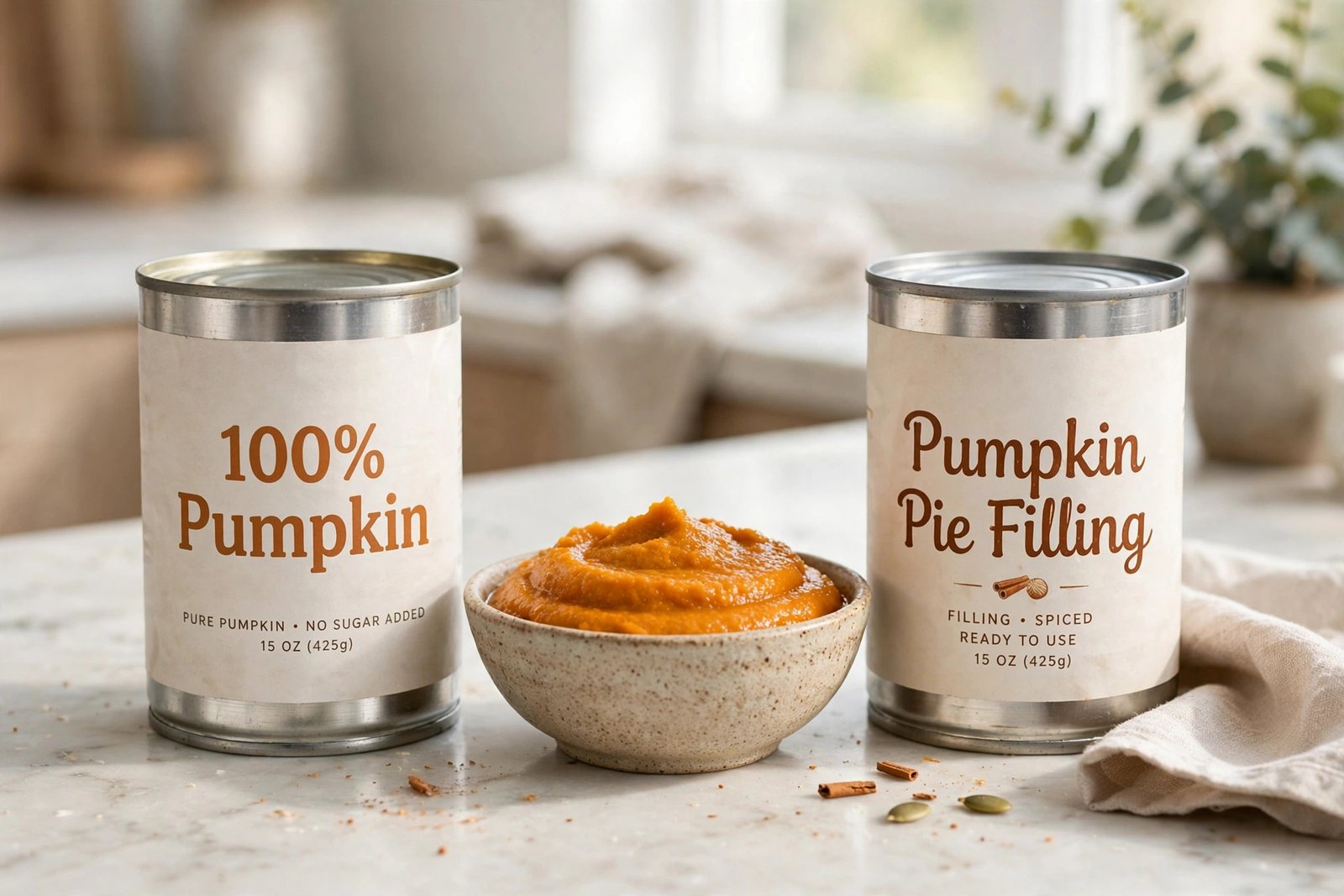
Yes — can dogs eat canned pumpkin? For most healthy dogs, yes, as long as the can says “100% pumpkin” and nothing else. Plain canned pumpkin is cooked, smooth, and easy to serve. But the can next to it, pumpkin pie filling, looks almost identical and is a different food entirely. This guide covers which can to buy, how much pumpkin can a dog eat, and when pumpkin will not help.
Is Pumpkin Good for Dogs?
Is pumpkin good for dogs? In small amounts, yes — but it is a modest helper, not a superfood. A tablespoon of plain canned pumpkin carries only about 0.4 grams of fiber and around 5 calories, according to Tufts University’s Petfoodology team — far less than most owners expect, so pumpkin works best as a gentle extra, not as the main fix for a digestive problem.
What pumpkin does offer is a useful mix of nutrients in a low-calorie package: vitamin A for vision and skin, potassium, zinc, iron, and beta-carotene, the antioxidant behind its orange colour. Mostly water and soft fiber, it is easy on a sensitive stomach and adds bulk without many calories. Like blueberries, it is one of the safer fruits and vegetables to share — provided the portion stays small and the pumpkin stays plain.
One honest limit: no clinical trial has tested pumpkin itself in dogs — the evidence supports fiber in general, not pumpkin in particular. If your dog has an ongoing digestive condition, the vet’s plan matters far more than any spoonful of pumpkin.
Canned Pumpkin vs Pumpkin Puree vs Pie Filling
Can dogs eat pumpkin in every form it comes in? No — the form matters more than the fruit. Canned pumpkin and pumpkin puree for dogs are the same thing when the label lists only pumpkin: cooked, mashed pumpkin, ready to serve. Fresh pumpkin works too, once cooked until soft and mashed. The danger is the third product on the shelf.
| Product | Safe for dogs? | What is inside |
|---|---|---|
| Plain canned pumpkin (“100% pumpkin”) | Yes | Pumpkin only, sometimes water |
| Homemade pumpkin puree | Yes | Cooked, mashed pumpkin, nothing added |
| Pumpkin pie filling / pie mix | No | Sugar, spices, sometimes xylitol |
| Raw pumpkin flesh | Not recommended | Hard, fibrous, difficult to digest |
| Pumpkin skin, stem and seeds | No | Choking risk and stomach upset |
Pie filling can carry more than three times the calories of plain canned pumpkin — up to 281 calories per cup against 83 — because of added sugar. Worse, some sugar-free pie products contain xylitol, which can cause dangerously low blood sugar and liver damage in dogs, and nutmeg in pie spice blends can be harmful in larger amounts. Read the ingredient list every time, even on a familiar brand. If the label says anything other than pumpkin (and water), put the can back.
To make pumpkin puree for dogs at home, halve a small sugar pumpkin, scoop out the seeds, and bake it cut-side down until the flesh is soft, about 45 minutes. Scoop out the flesh, mash it smooth, and let it cool — no salt, butter, oil, sugar, or spices. Freeze the extra in an ice-cube tray, one tablespoon per cube, for measured servings.
How Much Pumpkin Can a Dog Eat?
How much pumpkin can a dog eat? The Merck Veterinary Manual lists 1 to 4 tablespoons per meal as an added fiber source for constipation, starting at the low end. But a Chihuahua and a Great Dane should not get the same spoonful, so use body weight as your guide.
| Dog size | Weight | Daily amount to start |
|---|---|---|
| Toy | Under 5 kg | 1 teaspoon |
| Small | 5–10 kg | 1–2 teaspoons |
| Medium | 10–25 kg | 1 tablespoon |
| Large | 25–45 kg | 1–2 tablespoons |
| Giant | Over 45 kg | 2–4 tablespoons |
Two rules sit above the chart. First, all treats and extras together — pumpkin included — should stay under 10% of daily calories. Second, start small and build up over several days: a sudden spoonful of fiber can cause the very loose stool you were trying to fix. If your dog has diabetes, kidney disease, pancreatitis, or a chronic digestive condition, ask your vet before adding pumpkin at all.
How to Feed Pumpkin to Dogs
How to feed pumpkin to dogs is simple once the can is right: plain, measured, and mixed into food. Follow this 7-day plan the first time, watching the stool and appetite each day.
Day 1–2: Half the starting amount, mixed into one meal. Watch for gas or loose stool.
Day 3–4: The full starting amount, still in one meal a day.
Day 5–6: Split it across two meals if your vet agreed on a daily amount.
Day 7: Keep the amount steady if the stool is normal and your dog is eating well.
Stir the puree into kibble or wet food rather than serving it alone, so a fussy dog eats it without noticing. Serve it at room temperature. Refrigerate an opened can for no more than a week and freeze the rest in cubes. And always make sure your dog drinks enough water before adding fiber — fiber without water can pack into a constipated colon and make things worse.
Pumpkin for Dogs Diarrhea: What It Can and Can’t Do
Pumpkin for dogs diarrhea is the use owners ask about most, and the honest answer is: it can help a little, sometimes, only in mild cases. Pumpkin adds a small amount of soluble fiber, which forms a gel in the gut, slows digestion, and draws water in. But a tablespoon holds only about 0.1 grams of soluble fiber, so expect a modest effect, not a cure.
Use pumpkin only for the first row below. Anything else needs a vet, not a spoonful of pumpkin.
| What you see | What to do |
|---|---|
| One mild bout of loose stool in an adult dog that eats, drinks, and acts normally | Plain pumpkin is an option; keep water available and skip rich food and treats until the stool is normal |
| Loose stool lasting more than two days | Call your vet |
| Blood in the stool, black or tarry stool, vomiting, lethargy, or no appetite | Call your vet right away |
| A puppy or unvaccinated dog with vomiting and diarrhea | Call your vet for a parvovirus test and skip the pumpkin |
No veterinary source gives a fixed pumpkin amount for diarrhea — the Merck range is listed for constipation. If your vet agrees pumpkin is worth trying, start at the low end of the chart. Remember that loose stool with straining can actually be constipation with watery stool passing around a blockage, so check with your vet before treating it as diarrhea.
Pumpkin for Dogs Constipation
Pumpkin for dogs constipation is the better-studied use: the Merck Veterinary Manual lists pumpkin among the added fiber sources for constipation, at 1 to 4 tablespoons per meal. Most of its fiber is insoluble, which increases stool volume and frequency — but a tablespoon holds only 0.4 grams of total fiber, so it is a gentle nudge, not a strong laxative.
Water comes first: make sure your dog drinks well before you add fiber, and keep up daily exercise, since too little movement is a frequent cause. Vets also suggest limiting access to bones, another common cause. Signs include repeated unsuccessful attempts, scooting, frequent squatting or circling, a painful belly, and decreased appetite. Call your vet if your dog has not had a bowel movement within 48 to 72 hours, or sooner if the dog stops eating, vomits, or loses weight. Never give a laxative or any other medicine unless your vet tells you to.
Can Puppies Eat Pumpkin?
Can puppies eat pumpkin? Yes, in very small amounts, once the puppy is fully weaned and eating solid food — usually from around 8 weeks old. A puppy’s digestive system is still developing, so cut the adult starting amount roughly in half and introduce it even more slowly. One small teaspoon, mixed into a meal, is plenty for a first try; watch the stool for 24 hours before giving more.
Skip pumpkin entirely if the puppy is still nursing, or if it has vomiting and diarrhea — that needs a vet and a parvovirus test, not a home remedy. Keep the focus on the puppy’s main food: a complete puppy food should supply the vast majority of its calories, with pumpkin as a rare bonus. The same gentle approach applies to other new foods — puppies can eat mango too, in tiny portions, once they are eating solids.
Can Dogs Eat Pumpkin Pie? Raw Pumpkin, Seeds and Skin
Can dogs eat pumpkin pie? No — not the pie, not the filling, and not spiced treats made for humans. Pumpkin pie filling is pre-sweetened and seasoned, and it can contain sugar, cinnamon, nutmeg, ginger, and sometimes xylitol. A slice of pie also brings butter, cream, and sugar your dog does not need. Keep pumpkin desserts and pumpkin spice treats away from the bowl unless the label is made for dogs and lists no xylitol.
Raw pumpkin is not toxic, but it is hard and fibrous and difficult to digest — cook it first. The skin and stem are tough and can cause stomach upset or a blockage, so peel and discard them. The seeds are best left out too: large amounts can cause digestive upset and pose a choking hazard, especially for small dogs. Never serve them whole and raw.
The simplest safe pumpkin treat is a frozen cube of plain canned pumpkin, counted toward the daily amount. For variety, stir a dab of xylitol-free peanut butter into the cube before freezing — but check the peanut butter label first, since xylitol hides in some brands.
5 Mistakes to Avoid With Canned Pumpkin
- Grabbing pie filling by mistake. The cans sit side by side and look alike — read the ingredient list, not the picture.
- Starting with a full serving. Too much fiber too fast causes gas and loose stool — start at half the chart amount and build up over a week.
- Forgetting the 10% rule. Pumpkin plus every other treat must stay under 10% of daily calories — count the frozen cubes too.
- Using pumpkin instead of a vet visit. Loose stool lasting more than two days, blood, vomiting, or a puppy with diarrhea all need a vet — pumpkin cannot fix them.
- Serving it spiced, sweetened, or sugar-free. Cinnamon, nutmeg, sugar, and especially xylitol turn a safe food into a dangerous one. Plain means plain — and before sharing anything else from your plate, check which human foods dogs can eat are actually safe.
Frequently Asked Questions
Can dogs eat canned pumpkin every day?
Yes, most healthy dogs can have a small daily amount if it stays under the 10% rule. If your dog needs fiber every day, though, pumpkin provides relatively little — ask your vet about a therapeutic diet or a fiber supplement such as psyllium instead.
How fast does pumpkin work for dog diarrhea?
No veterinary source gives a timeline, and the effect is small. If loose stool lasts more than two days or comes with any warning sign, call your vet rather than giving more pumpkin.
Are pumpkin seeds safe for dogs?
Plain roasted seeds in tiny amounts are sometimes used, but whole raw seeds can cause digestive upset and pose a choking hazard. Leave them out unless your vet says otherwise.
The Bottom Line
Can dogs eat canned pumpkin? Yes — plain, measured, and mixed into meals. Buy the can that lists only pumpkin, start small, and keep it under 10% of daily calories. Pumpkin can gently help mild constipation and sometimes a mild bout of loose stool, but it is a small helper, not a cure. Know the label traps, know when to call the vet, and this orange staple can be a safe little extra in your dog’s bowl all year.
