
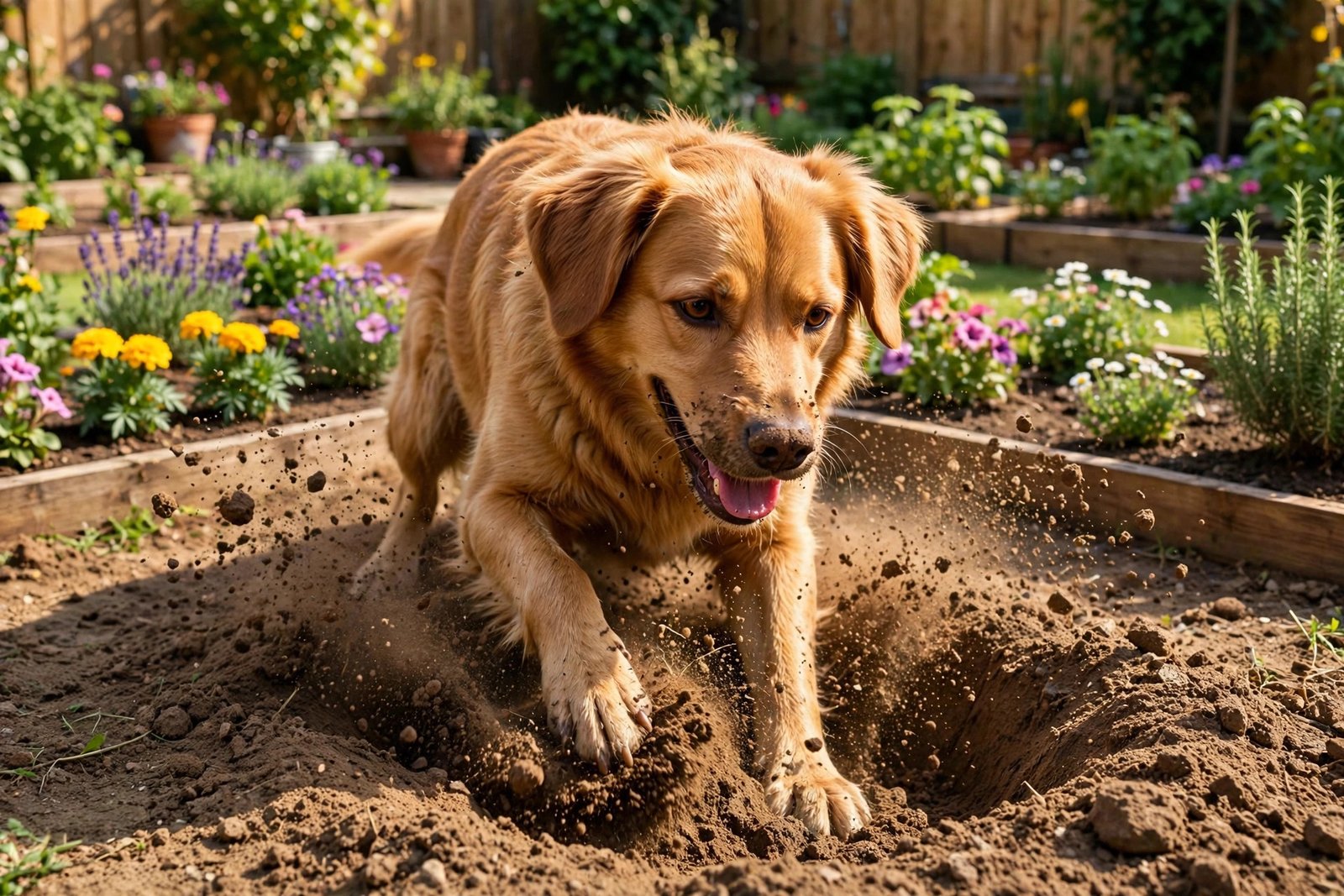
You step outside with your morning coffee and there it is: another crater in the lawn, a flower bed torn open, and your dog standing beside it looking extremely pleased with himself. To your dog, digging is one of the most natural things in the world. Terriers were bred to go underground after burrowing animals, dachshunds to follow badgers into their dens, huskies dig cool hollows, and beagles will follow an interesting smell straight through a flower bed. The Merck Veterinary Manual lists digging alongside chewing and pulling as normal canine behaviour, and this digging habit is one owners still find highly undesirable.
That is the key: you cannot train a normal behaviour away by shouting at it. Work out why your dog digs, then give that reason a better answer: a bored dog needs a busier brain, an escaping dog a secure boundary, a hot dog shade, a worried dog calm. This guide shows you how to stop my dog from digging by matching the fix to the reason, with seven fixes and a 7-day routine.
Why Do Dogs Dig?
If you keep asking why is my dog digging, it is usually one of six reasons.
Instinct comes first. Some breeds carry a strong burrowing drive, and no telling-off removes it. A terrier puppy that digs is doing the job it was bred for, and needs an outlet, not a lecture.
Boredom is the most common reason. A dog left alone in a yard with nothing to do will invent a job, and digging is a very satisfying one. If the holes appear when your dog is alone, boredom is the cause.
Escape is the third. Dogs dig along a fence line when something on the other side is interesting: another dog, a cat, or just the wider world. This digging matters most: a dog that gets under a fence can end up lost or hurt.
Cooling off is the fourth. On a hot day the top layer of soil is warm and the earth underneath is cool, so a dog that digs a shallow hollow and lies in it is running its own air conditioning.
Hunting and hiding are the fifth. A dog that smells mice or insects under the lawn will dig to reach them, and one that buries bones and toys is caching treasure for later. Flower beds are favourites because the soil is soft and full of smells.
Anxiety is the sixth. Dogs stressed by being left alone, by storms, or by fireworks sometimes dig as a coping behaviour, often near doors or gates, with other signs: pacing, whining, or a dog that will bark at night.
Read the Hole: What Your Dog’s Digging Pattern Tells You
You can learn most of what you need from where and when the holes appear. Watch for a week before you change much, and note each hole’s place and time.
| Where and when | Likely reason | Fix to try first |
|---|---|---|
| Along the fence or under the gate | Escape, or something interesting outside | Secure the fence line, block the view |
| Random holes all over the lawn, when alone | Boredom and pent-up energy | More exercise, brain games, supervision |
| A shallow hollow in the shade, hot afternoons | Cooling off | Shade, cool water, a paddling pool |
| In flower beds and soft soil | Hunting smells, burying treasure | Fence off beds, give a digging pit |
| Near the back door, when you leave | Separation anxiety | Gradual alone-time training |
| At night, in the bedding or on the sofa | Nesting and comfort | A proper bed, a blanket to arrange |
| Sudden digging plus eating dirt | Possible pain, nausea, or a mineral craving | Vet visit first, not training |
That last row is the one to take seriously. A dog that suddenly starts digging and swallowing soil may be unwell, and no training plan fixes a medical problem. If the change is sudden, or the digging comes with vomiting, diarrhoea, weight loss, or pain while digging, call your vet first.
How to Stop My Dog From Digging: 7 Fixes That Match the Reason
There is no single trick: work through the fixes that match your dog’s pattern, and give each one a fair week. If you are looking for how to keep dog from digging, start with the pattern.
1. Tire the Brain Before Yard Time
This is the first step in stopping holes in the yard for good: tire the brain before the paws get bored. A twenty-minute sniff walk, where your dog sets the pace and sniffs freely, works the brain harder than a fast march around the block. Add a puzzle feeder at breakfast and five minutes of training before yard time. If walks turn into a tug-of-war, work on pulling on the leash first: a calm walk tires a dog out far better than a frantic one.
2. Interrupt, Redirect, Reward
When you catch your dog mid-dig, stay calm. Yelling or grabbing your dog teaches one thing: dig when you are not looking. Use a neutral sound, a quick “oops” or a kissy noise, just enough to lift their head. Call them to you, reward them, then give them something else to do: a game of tug, a scent game, or a trip to their digging pit. That is positive reinforcement: reward the behaviour you want so it happens more often. Never punish a hole you found after the fact: your dog cannot connect your frustration to something done an hour earlier.
3. Build a Legal Digging Pit
For dogs with a strong digging drive, the most effective fix is not stopping the digging but moving it. A designated digging area gives that drive somewhere to go, and the Merck manual notes that outdoor dogs benefit from a place where digging is allowed.
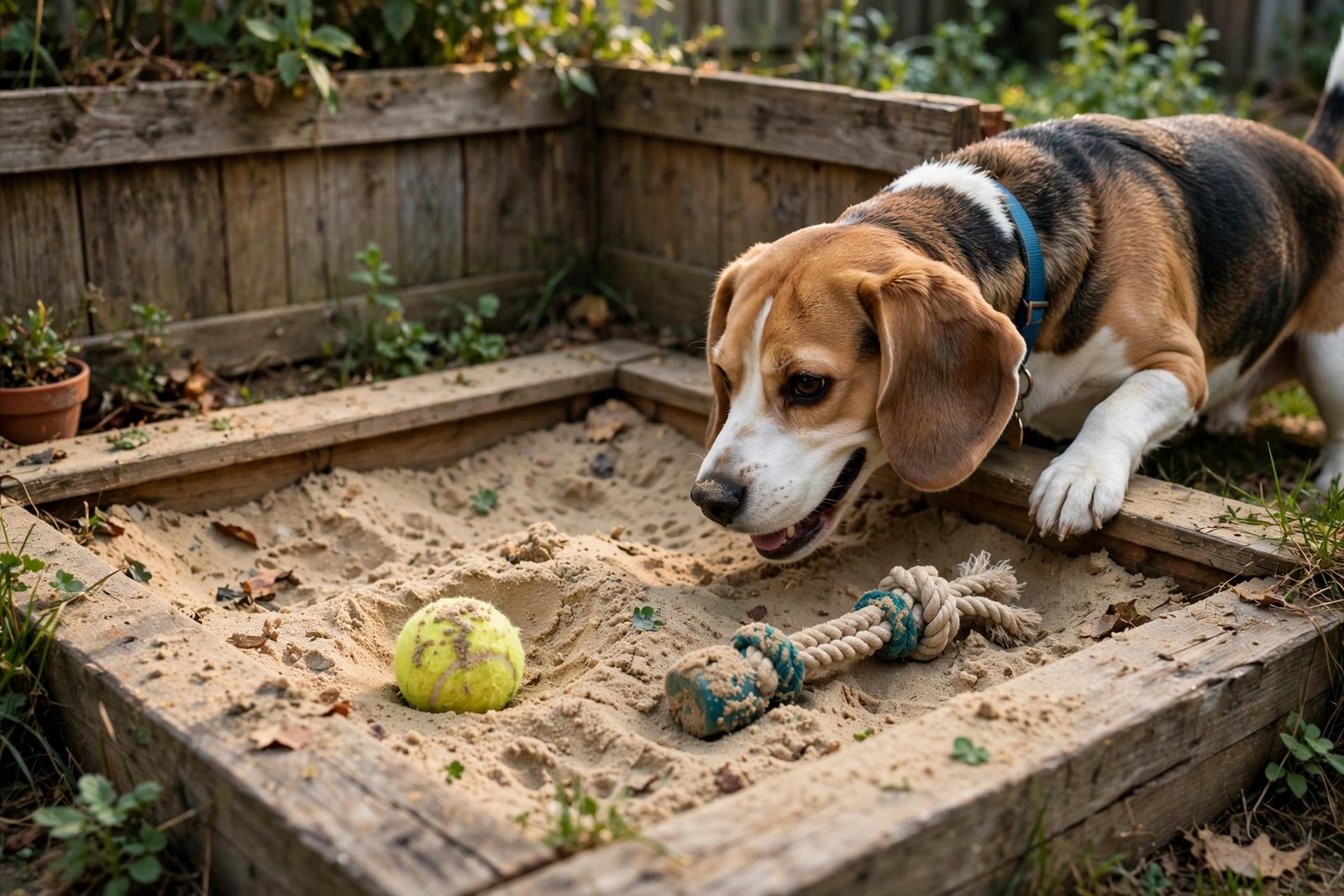
Pick a quiet corner away from fences and flower beds. Build a wooden frame about 1.2 metres square and 20 centimetres deep, fill it with clean play sand, and bury a favourite toy or a few dog-safe treats just under the surface. Show your dog the spot, dig in it yourself a little, and reward them every time they dig there. Most dogs get the idea within a week: the pit always has something buried in it.
4. Secure the Fence Line
If your dog digs to escape, training alone will not keep them safe. A dog digging under fence panels needs a physical fix first, not a lecture. Walk the fence and fill every gap under gates and panels. The most reliable fix is an L-shaped footer: bury chicken wire about 30 centimetres deep, then bend the bottom 30 centimetres outwards under the lawn. A dog that digs down hits wire and gives up. As a quick fix, place large flat stones along the fence base and block the view through slatted fences. Check the fence weekly: a determined escape artist will test the same spot again and again.
5. Give the Hot Dog a Cool Rest Spot
A dog digging a cool hollow is telling you the garden is too hot. Give them shade, fresh water, and a place to lie that stays cool: a raised bed in the shade, a damp towel, or a shallow paddling pool. Move yard time to the cooler morning and evening. If the digging stops when the weather cools, the fix was comfort, not discipline.
6. Calm the Anxious Digger
Digging that happens when you leave, during storms, or at night usually has worry behind it. Start by making departures boring: pick up your keys, sit down again, and repeat until the sound means nothing. Build alone time in tiny steps, and leave a stuffed Kong or a lick mat as your dog settles. A dog with separation anxiety needs slow, patient work, and a vet behaviourist can help if the distress is severe. Do not crate a panicking dog: it can hurt its teeth and claws trying to escape. If the digging comes with pacing, whining, or a dog that will bark at night, treat the anxiety first and the digging will usually fade with it.
7. Supervise the Puppy
Puppies dig because everything is new and their paws are busy. The fix for a puppy is supervision, not punishment. Keep yard sessions short, stay outside with them, and interrupt the moment the paws start moving. Give a puppy a small sand tray of its own, and rotate toys so the garden stays interesting. Most puppies grow out of the worst of it as their world gets bigger.
What NOT to Do
Some popular advice makes digging worse. Do not fill a hole with your dog’s faeces: it is unhygienic, and many dogs will simply dig a fresh hole beside it. Do not scatter cayenne pepper, chilli flakes, or essential oils: they can burn a dog’s nose, eyes, and paws. Do not use shock collars, spray cans, or rattling jars to startle your dog: fear-based methods damage trust and push the digging to times when you are not watching. And do not chain a dog out: a tethered dog that wants to dig will tangle, panic, or hurt itself.
A 7-Day Plan to Stop the Digging
Put the fixes together and the change comes faster than expected.
Day 1: Watch and note. Log where and when each hole appears, and check the fence for gaps.
Day 2: Start the sniff walk and the puzzle feeder. Build the digging pit.
Day 3: Practise interrupt, redirect, reward. Bury treats in the pit.
Day 4: Fix the fence line or the flower beds, whichever your log points to. Add shade and water if heat is a factor.
Day 5: Start the alone-time steps if anxiety is part of the picture.
Day 6: Review the log. Fewer holes in the wrong places means the plan is working.
Day 7: Keep the routine going. The pattern should be shifting towards the pit and away from the lawn.
Frequently Asked Questions
Why do dogs dig holes in the garden?
Dogs dig because it is natural for them. The usual reasons are instinct, boredom, escape, cooling off, hunting smells, burying treasure, and anxiety. Read the hole: where and when it appears tells you which reason is driving your dog.
How do I stop my puppy from digging?
The honest answer to how to stop a puppy from digging is supervision plus a legal outlet. Keep yard time short, stay outside with your puppy, and interrupt the moment the paws start moving. Redirect your puppy to a small sand tray or digging pit and reward digging there.
My dog keeps digging under the fence. What works?
The short version of how to stop dog from digging under fence is: secure the fence first, then work on the reason. Bury chicken wire 30 centimetres deep with the bottom bent outwards, fill gaps under gates, and block the view through slats. Then add more exercise if it is boredom, and calm departure training if it is anxiety.
Why do dogs dig in bed?
Pawing and circling the bedding is nesting behaviour. Wild dogs turned in circles to flatten grass before lying down, and pet dogs still do it. Give your dog a proper bed and a blanket they can arrange, and it usually settles into a quick circle before sleep.
Will neutering stop my dog from digging?
Probably not. Digging is driven by instinct, boredom, and environment rather than hormones, so neutering rarely changes it. The fixes that work are exercise, mental stimulation, and a legal digging spot.
A yard full of holes is frustrating, but it is also information. Your dog is telling you what they need: more to do, somewhere cooler to lie, a way out, or a calmer day. Match the fix to the reason, give your dog a legal place to dig, and keep the routine going. The holes will move to the right place.
