
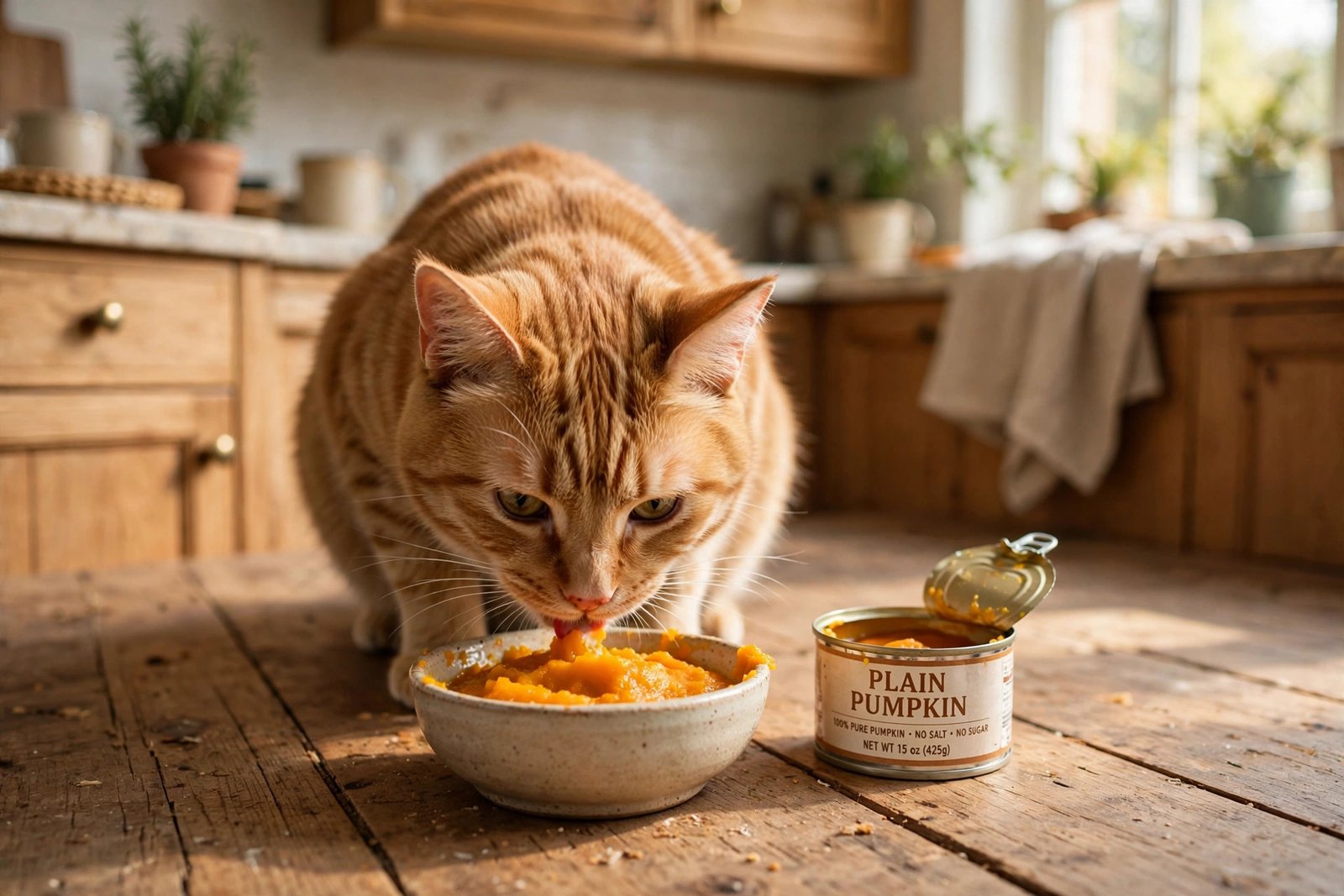
Your cat is crouched in the litter box again, straining, and you remember the half-used can of pumpkin in the fridge. But before you scoop anything into the food bowl, ask the question properly — because with cats, the difference between helpful and harmful is often one wrong can. So, can cats eat pumpkin puree? Yes — most healthy adult cats can safely eat small amounts of plain, unsweetened pumpkin puree. The word doing all the work in that sentence is plain.
Can Cats Eat Pumpkin Puree? The Short Answer
Yes, cats can eat pumpkin puree in small amounts, as long as it is plain and unsweetened. Pumpkin itself is not toxic to cats. It is mostly water and fiber, which is why vets sometimes suggest it for mild digestive trouble. A teaspoon or two mixed into regular food is the usual range for a healthy adult cat — never a bowlful on its own, and never as a replacement for a proper meal.
Cats are obligate carnivores. Their bodies are built to get their nutrients from animal protein, and no plant food can replace a complete and balanced cat food. Pumpkin is an extra, a small supplement to the diet.
Is Pumpkin Good for Cats?
So is pumpkin good for cats, beyond simply being safe? For many cats, yes — in small doses, for the right reason. Its value comes down to three things: fiber, moisture, and very few calories.
Pumpkin carries two kinds of fiber that do different jobs: soluble fiber absorbs water in the gut and can help firm up loose stools, while insoluble fiber adds bulk and can help keep bowel movements regular. That is why pumpkin shows up in so many conversations about feline digestion and gut health. It also adds moisture, which supports hydration, plus vitamin A, beta-carotene, potassium, and a little zinc, all for very few calories.
None of that makes pumpkin a medicine. The evidence for pumpkin as a treatment is limited, and it does not fix the cause of a digestive problem — parasites, a sudden diet change, dehydration, stress, or an infection will still be there after the pumpkin is gone. What it can do is support normal stool consistency while you and your vet sort out the real issue. It may also help with hairballs, since the extra fiber can help move swallowed fur through the gut. Keep portions tiny and stop if anything gets worse.
Which Pumpkin Puree Is Safe for Cats?
Walk down the baking aisle and you will find several cans that look almost identical. Only one of them belongs in a cat’s bowl. The safest choice is 100% pure pumpkin puree, with pumpkin as the only ingredient on the label. If the ingredient list says anything else, put the can back.
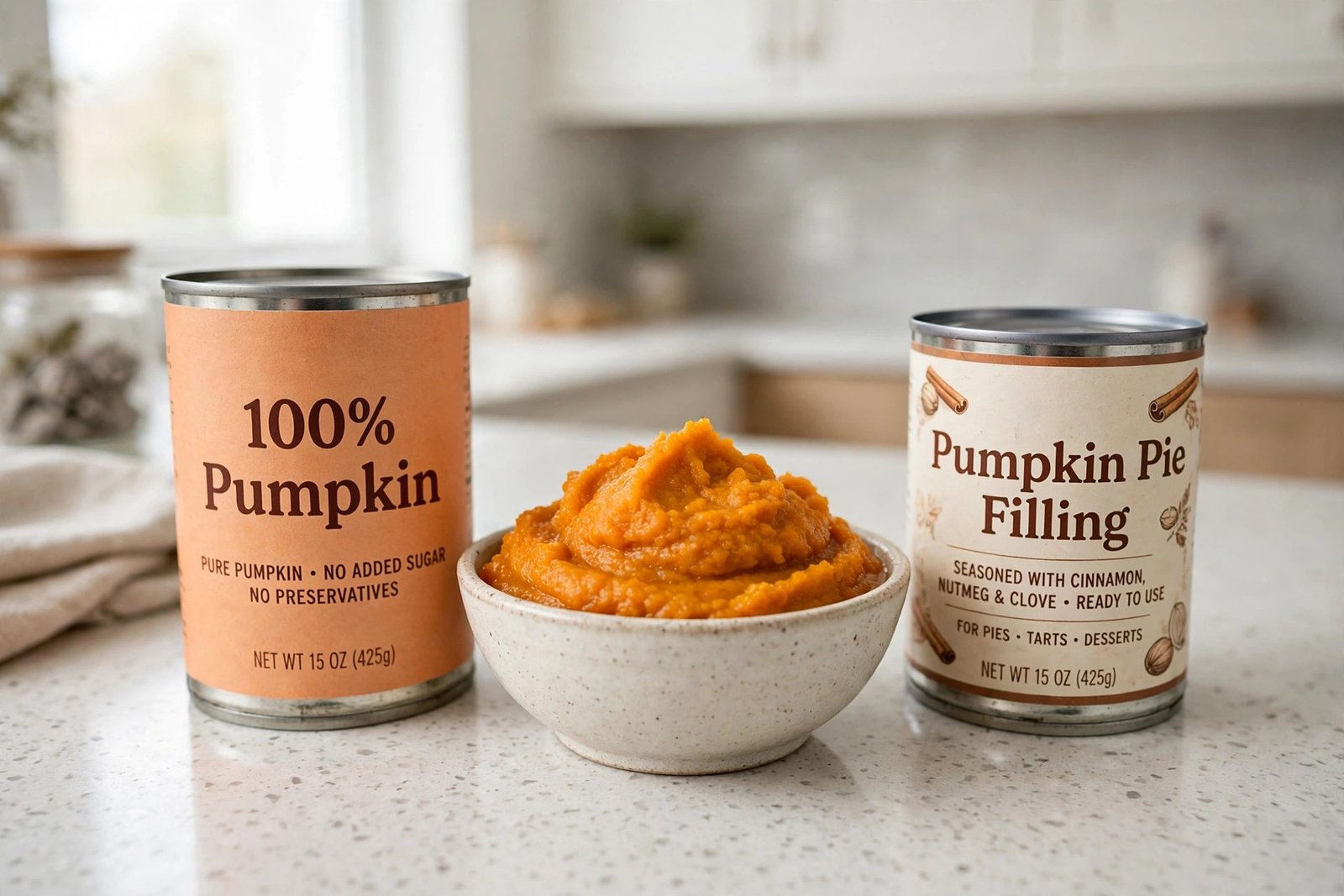
The trap is pumpkin pie filling. It looks the same, sits on the same shelf, and costs about the same — but it is sweetened and spiced, usually with sugar or corn syrup, cinnamon, clove, and nutmeg. Nutmeg contains myristicin, a compound that can cause neurological signs in cats in large enough amounts. Sugar-free versions are not a safe shortcut: some contain xylitol, an artificial sweetener that is extremely toxic to pets.
| Label says | Safe for your cat? |
|---|---|
| 100% pumpkin (only ingredient) | Yes — the best choice |
| Pumpkin pie filling / pie mix | No — sugar, spices, nutmeg |
| Spiced or flavored pumpkin | No — added seasonings |
| Sugar-free pumpkin | No — check for xylitol and additives |
| Fresh pumpkin, steamed and mashed | Yes — if plain, with no butter or salt |
Homemade puree works just as well: halve a small pumpkin, scoop out the seeds, steam or bake until soft, mash smooth, and serve plain — no butter, salt, or sugar. Freeze the extra in an ice cube tray, one tablespoon per cube.
Pumpkin Puree for Cats: Safe Serving Amounts
Cats need far less pumpkin than dogs do. Where a medium dog might get a tablespoon or more per meal, a cat’s whole serving is measured in teaspoons. Pumpkin puree for cats should always be mixed into regular wet or dry food, and it should stay within the 10% rule: treats and extras together should make up no more than about 10% of daily calories.
| Cat size | Start with | Upper range (vet guidance only) |
|---|---|---|
| Small cat, under 8 lbs | 1/4 teaspoon | 1/2 teaspoon |
| Average cat, 8–12 lbs | 1/2 teaspoon | 1 teaspoon |
| Large cat, over 12 lbs | 1/2–1 teaspoon | Up to 1 tablespoon |
Start at the bottom of the range and stay there for a few days. If your cat tolerates it — normal appetite, normal energy, normal stools — keep the same small amount a few times a week. More is not better: too much fiber, too fast, can cause gas, bloating, or the exact opposite of the result you wanted. Dogs can eat canned pumpkin too, but in much bigger servings — a reminder that cat portions and dog portions are not interchangeable.
Pumpkin for Cats Diarrhea
Pumpkin for cats diarrhea is the use most owners hear about first. When stools are loose, the soluble fiber in pumpkin absorbs excess water in the gut, which can help firm things up, while the bulk gives the bowel something more normal to work with.
But pumpkin is a support, not a cure. Mild, one-off loose stool after a food change or a stressful day is where it may help. Diarrhea that lasts more than a day or two, or comes with vomiting, blood, or lethargy, needs a vet — not a bigger spoonful. Kittens dehydrate fast, so keep fresh water available and call the clinic if stools do not improve within 24 to 48 hours.
Pumpkin for Cats Constipation
The same fiber works the other way, too. Pumpkin for cats constipation helps because the insoluble fiber adds bulk to the stool while the water in the puree softens it, which can make a difficult bowel movement easier to pass. Many vets suggest it as a first, gentle step for a mildly constipated cat that is otherwise well.
But constipation is not always simple. A cat that strains and produces nothing may be constipated — or may be unable to urinate, which is an emergency, especially in male cats. If your cat has not passed stool in more than 48 hours, is crying, hunched, or hiding, skip the pumpkin and call your vet. Do not add more pumpkin to force a bowel movement; too much fiber can make the blockage worse. If constipation keeps returning, the cause needs to be found, not papered over.
Can Kittens Eat Pumpkin?
Can kittens eat pumpkin? Weaned kittens can have a tiny amount of plain pumpkin puree, but check with your veterinarian first. A kitten’s digestive system is still developing, so a dab on your finger — far less than an adult serving — is the most to offer, and only once the kitten is eating solid food.
Kittens also have different nutritional needs from adults. Their food must be rich in protein, fat, vitamins, and minerals to support fast growth, and pumpkin contributes almost none of those, so it should never replace kitten food. If your kitten is younger than eight weeks, or has diarrhea, constipation, or a poor appetite, speak to a vet before offering pumpkin at all. Diarrhea in young cats can lead to dehydration in hours, so home remedies are the wrong tool for a sick kitten.
Can Cats Eat Raw Pumpkin?
Can cats eat raw pumpkin? Technically, raw pumpkin is not toxic — but it is a bad idea in practice. Raw flesh is hard, fibrous, and difficult for a cat to chew and digest. The skin is a choking hazard, and the stem is not food at all. Cook it first, always.
The same caution applies to the seeds. Can cats eat pumpkin seeds? Plain seeds are not considered toxic, but they are hard, shelled, and easy to choke on — and they add nothing your cat needs. Keep the seeds, rind, and stem out of reach at Halloween, and do not let your cat chew on the jack-o’-lantern.
Can Cats Eat Pumpkin Pie?
Can cats eat pumpkin pie? No — and this is where the most common mistake happens. The pie itself is the problem, not the pumpkin in it. A slice contains sugar, butter, milk or cream, and a spice mix that usually includes nutmeg and cinnamon. The sugar and fat can trigger vomiting or diarrhea, and nutmeg is the real concern: in enough quantity, its myristicin can cause disorientation and tremors.
Pumpkin pie filling from a can is the same story in concentrated form: if it says pie, filling, mix, or spiced anywhere on the label, it is not for your cat. The same applies to pumpkin spice lattes and muffins — and never share dishes cooked with garlic or onion, which are toxic to cats. If your cat steals a lick of pie, watch for vomiting or wobbliness and call your vet if anything seems off. For more everyday guidance, see our list of human foods that are safe for cats.
A 7-Day Introduction Plan
Other guides tell you to start small. Few tell you exactly what “start small” looks like across a week — so here is a simple plan.
| Day | What to do |
|---|---|
| Day 1 | Mix 1/4 teaspoon of plain puree into wet food. Watch appetite and energy. |
| Day 2 | No pumpkin. Check the litter box — stools should look normal. |
| Day 3 | Repeat the 1/4 teaspoon. If stools stayed normal, you are on track. |
| Day 4 | No pumpkin. Note any gas, soft stool, or refusal to eat. |
| Day 5 | Try 1/2 teaspoon if days 1–4 went well. Stop if anything changed. |
| Day 6 | No pumpkin. A rest day keeps the gut from getting too much fiber at once. |
| Day 7 | Settle on the amount that worked — usually 1/4 to 1/2 teaspoon, a few times a week. |
Warm the puree slightly — barely warm, never hot — and offer it mixed into food rather than alone. Freeze the rest of the can in an ice cube tray. If your cat refuses pumpkin entirely, do not force it — a cat that will not eat pumpkin is not missing out on anything essential.
When to Skip Pumpkin and Call the Vet
Plain pumpkin is generally safe in small amounts, but some symptoms mean the problem is bigger than a spoonful of fiber can fix. Contact your veterinarian if you notice: blood in the stool; repeated vomiting; straining with nothing coming out; no bowel movement for more than 48 hours; unusual tiredness or increased hiding; signs of pain, such as crying or a hunched posture; or diarrhea that continues for more than a day or two.
Straining without producing urine is an emergency, particularly in male cats — do not assume it is constipation. Cats with diabetes or kidney disease should get veterinary approval first, and if you reach for pumpkin every week because digestion never settles, that pattern itself is worth a vet visit. If you are unsure whether a symptom is serious, read our guide to the warning signs of illness in cats — it is better to check early than to wait and hope.
Frequently Asked Questions
Can cats eat pumpkin puree every day?
Small amounts may be appropriate for a few days to ease mild digestive changes, as long as your cat tolerates them. Ask your veterinarian before making pumpkin a regular part of your cat’s diet — cats do not need large amounts of plant fiber, and too much can crowd out proper nutrition.
What if my cat will not eat pumpkin?
That is completely fine. Mix a tiny amount into wet food, warm it slightly, or try offering it on your finger. If your cat still refuses, drop it — pumpkin is an optional extra, and your cat loses nothing by skipping it.
The Teaspoon Rule, in Short
Can cats eat pumpkin puree? Yes — plain, unsweetened, and by the teaspoon. Choose 100% pure pumpkin, start with a quarter teaspoon, watch the litter box, and never use it to paper over a real health problem.
