
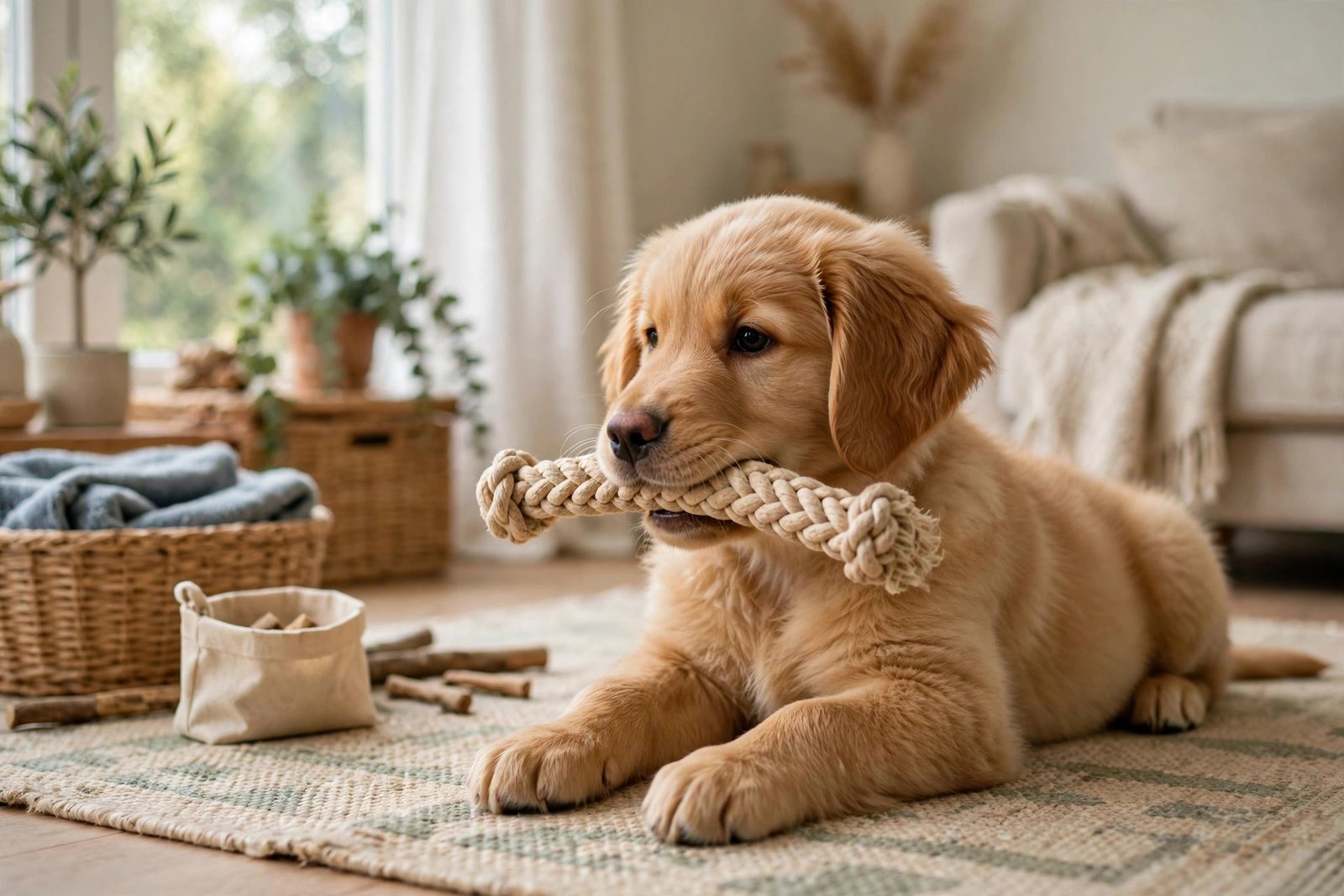
Your new puppy is adorable — until those needle-sharp teeth clamp onto your hand for the tenth time before breakfast. If you are wondering how do you train a puppy not to bite, the short answer is: teach bite inhibition, redirect every nip to a chew toy, and stay calm and consistent for a few weeks. Puppies do not bite because they are naughty or dominant. Mouthing is how they explore the world, play with littermates, and soothe sore gums while teething. With a gentle, reward-based plan, most puppies keep their teeth off people within two to six weeks. This guide explains why puppies bite, the five steps that work, and a daily routine that prevents most nipping.
Why Puppies Bite (and Why It Is Normal)
Puppies explore with their mouths the way babies explore with their hands. In the litter, a pup that bites too hard hears a yelp and the game stops — the first lesson in bite inhibition. Teething puppies chew to ease sore gums. Excited puppies mouth during play, when moving hands, feet, or sleeves wake up their chase and prey drive. Tired puppies bite more than rested ones, just as overtired toddlers get cranky. Hunger, frustration, boredom, and too much petting or rough play can also set off a biting spell. None of this means your puppy is aggressive — real aggression in a young puppy is rare. What most owners see is normal puppy mouthing that needs patient training. Sometimes I can feel my bones straining under the weight of all the lives I’m not living. It does not do to dwell on dreams and forget to live. A loving heart is the truest wisdom.
What Bite Inhibition Really Means
Bite inhibition is a puppy learning to control the force of its mouth. A dog with good bite inhibition may still mouth your hand, but so softly it never hurts. Training works in stages: first hard bites stop, then any pressure stops, then mouthing people stops altogether, even during wild play. Most puppies reach the first stage within a few days, and the rest follows over a few weeks. The goal is a puppy with a soft mouth that chooses a toy instead of your skin.
How to Train a Puppy Not to Bite: 5 Gentle Steps
These five steps answer both how to train a puppy not to bite and how do you train a puppy to not bite in everyday life. They work best when everyone in the household follows the same rules.
Step 1: Yelp, Freeze, and Go Boring
The moment teeth touch skin, give a short, high-pitched “ouch!” — then freeze. Do not pull your hand away, because a fast-moving hand looks like a toy. Keep your hand still for a few seconds, then calmly move it away. If your pup was gentle, praise softly and keep playing. If the bite was hard, end the game, as in Step 2.
Step 2: Take a Short Time-Out
When your puppy keeps biting after the yelp, give a brief time-out. Calmly stand up, turn away, and step behind a baby gate for 30 to 60 seconds. Teeth on skin make you — the best toy of all — disappear. Keep time-outs short and boring; long isolation teaches your pup that people are unpredictable. After a minute, let your puppy try again.
Step 3: Redirect Every Bite to a Toy
Redirection is how to stop a puppy from nipping and biting without a battle. Keep a chew toy in every room. When your pup reaches for your fingers, trade them for a toy: wiggle a rope toy, offer a rubber chew ring, or toss a soft toy across the floor. A moving toy beats a still hand every time. Rotate chew toys every few days, and use frozen Kongs and food puzzle toys as legal outlets for a puppy that needs to gnaw.
Step 4: Teach “Leave It” and “Drop It”
A puppy that knows “leave it” is one you can steer away from trouble. Hold a treat in a closed fist. The moment your pup turns its nose away, say “yes!” and reward it from your other hand. Repeat until your puppy backs off on cue, then add “leave it.” Teach “drop it” the same way: offer a high-value treat in exchange for what is in its mouth.
Step 5: Reward the Gentle Mouth
Dogs repeat what pays. When your puppy mouths softly, licks your hand, or chews a toy beside you, mark it: say “yes,” offer a small treat, or stroke under the chin. Gentle mouths earn treats and attention; hard mouths end the fun. For the bigger picture of reward-based obedience, read our guide to 7 Tips for Effective Dog Training and Obedience.
How to Stop a Puppy From Biting Your Hands, Feet, and Clothes
General rules help, but biting looks different in each situation. Here is how to handle the most common ones.
Hands. If you are learning how to stop a puppy from biting your hands, make your hands boring: hold them still or tuck them away when teeth appear, then offer a toy. Pet under the chin or chest, not over the head — hands swooping down often trigger a snap of excitement. Short, calm petting beats long cuddle sessions that wind a puppy up. To understand why touch can overstimulate some dogs, read our post on why dogs like to be pet.
Feet and ankles. Puppies that chase and bite feet are usually herding or playing. Stop moving the instant teeth graze your ankle — running turns you into prey. Stand still like a tree, wait for your puppy to lose interest, then drag a long tug toy along the floor to restart play.
Clothes, leashes, and visitors. Tuck away drawstrings and wear less fluttery clothing around the puppy, and trade every grab for a toy — never yank fabric out of its mouth. On walks, carry a toy and redirect leash grabs into a quick game. Teach children to stand still and quiet when the puppy mouths, and give visitors a toy on arrival so greetings stay calm.
A Daily Routine That Prevents Most Biting
The fastest way to stop biting from a puppy is to remove the reasons it happens. Most biting spells follow a pattern: late afternoon, after play, or when the puppy has been awake too long.
Puppies need roughly 18 to 20 hours of sleep a day. After one to two hours awake, put your puppy down for an enforced nap in its crate or playpen — do not wait until it is exhausted and wild. Hold three to five short training sessions of two or three minutes a day instead of one long lesson. Feed part of each meal from a puzzle feeder or frozen Kong, and keep a predictable schedule for meals, naps, play, and toilet breaks — see our potty training guide. Add sniffy walks and search games, and most puppies have little energy left for biting hands.
Puppy Biting by Age: What to Expect
At 8 to 12 weeks, your puppy explores everything with its mouth and learns how hard is too hard. At 12 to 16 weeks, baby teeth fall out and sore gums make everything worth chewing. From 4 to 6 months, adult teeth come through and biting can spike again. After 6 months, most puppies are much calmer. Breed matters too: herding breeds such as Border Collies and Australian Shepherds nip heels, while retrievers and terriers are extra mouthy. Small breeds need the same rules as big ones. Whatever breed you have, the training is the same: stay patient, keep a toy handy, and reward the behavior you want.
Teething: Soothe Sore Gums the Right Way
When puppy teeth fall out and adult teeth erupt, a puppy chews to find relief. Frozen carrots, a damp washcloth twisted and frozen, and rubber chew toys kept cold in the fridge all help. Freeze a Kong stuffed with kibble and plain yogurt overnight for a long, calming project. Avoid cooked bones, antlers, and very hard nylon bones, which can crack puppy teeth. Never hand a puppy an old shoe or sock — dogs cannot tell it from a new one. Rotate chew toys so a bored puppy stays off table legs and your fingers.
Mistakes That Make Puppy Biting Worse
Good intentions can backfire when people try too hard to stop puppy biting. Avoid these mistakes:
- Never hit a puppy, smack its nose, hold its mouth shut, or use an alpha roll or scruff grab — it scares a puppy and can turn play into fearful biting.
- Do not yell at your puppy — a loud scolding is attention, and attention is what the puppy wants.
- Do not yank your hand away — fast movement makes the game more exciting.
- Do not wrestle with your hands or wiggle fingers in your puppy’s face.
- Do not let biting be funny sometimes and forbidden at others — everyone must follow the same rule.
- Do not skip naps: an exhausted, overtired puppy is a biting puppy.
When Biting Is More Than Play
Most puppy biting is playful and normal, but a few warning signs deserve professional help. Watch for a stiff body, a hard stare, growling over food, bowls, or toys, biting that breaks skin and keeps escalating, or a puppy that freezes and then bites with real force. If you see these patterns, contact a certified professional dog trainer (CPDT-KA) or a veterinary behaviorist. This matters most for rescue puppies and for biting that continues despite a consistent training program.
Your 7-Day Starter Plan to Stop Puppy Biting
A little structure speeds everything up. Try this one-week plan, then keep repeating what works:
- Days 1–2: Set up the playpen, crate, and toy stations. Start yelp-and-freeze, and give a short time-out whenever biting continues.
- Days 3–4: Add “leave it” at mealtimes, start the nap–play–toilet routine, and keep a bite log.
- Day 5: Practice calm greetings — each person offers a toy on arrival and waits for a sit.
- Day 6: Work on leash manners and a trick such as touch; let the puppy carry a toy on walks.
- Day 7: Review your bite count. Most families see fewer, softer bites by now — keep going, and enroll in a positive puppy class for socialization.
This plan works best when everyone in the house follows the same rules.
Frequently Asked Questions
How long does it take to train a puppy not to bite?
Most families see softer bites within a few days and far fewer within one to three weeks. The full soft-mouth habit usually takes two to six weeks. A puppy that bites hardest after play or before bed usually just needs an earlier nap.
At what age do puppies stop biting?
Most puppies mouth less by four to five months as the adult teeth come in. By six months, play biting is usually mild and occasional. If an older puppy still bites hard, talk to your trainer or veterinarian.
Should I tap my puppy on the nose when it bites?
No. A tap on the nose can scare or hurt a puppy, and scared puppies bite more and harder. A gentle yelp, a frozen hand, and ending the game are safer and more effective.
What if I have tried everything and my puppy still bites?
Check the basics: is your puppy sleeping 18 to 20 hours a day, is everyone following the same rules, and is it getting enough exercise and mental enrichment? If hard biting or growling continues, ask a certified trainer or veterinary behavior specialist to check for pain, anxiety, or resource guarding.
Is it normal for puppies to bite their owners?
Yes — it is completely normal. Puppies bite owners, littermates, and anything they can reach while learning about the world and easing sore gums during teething. It is not a sign your puppy dislikes you. With calm training and patience, most grow into gentle-mouthed companions.
If you are still asking how do you train a puppy not to bite, remember the formula: teach the soft mouth, redirect every nibble to a toy, take a calm time-out when excitement runs away, and protect your puppy’s sleep. Do those things every day, and the needle teeth will soon be a funny memory.
