
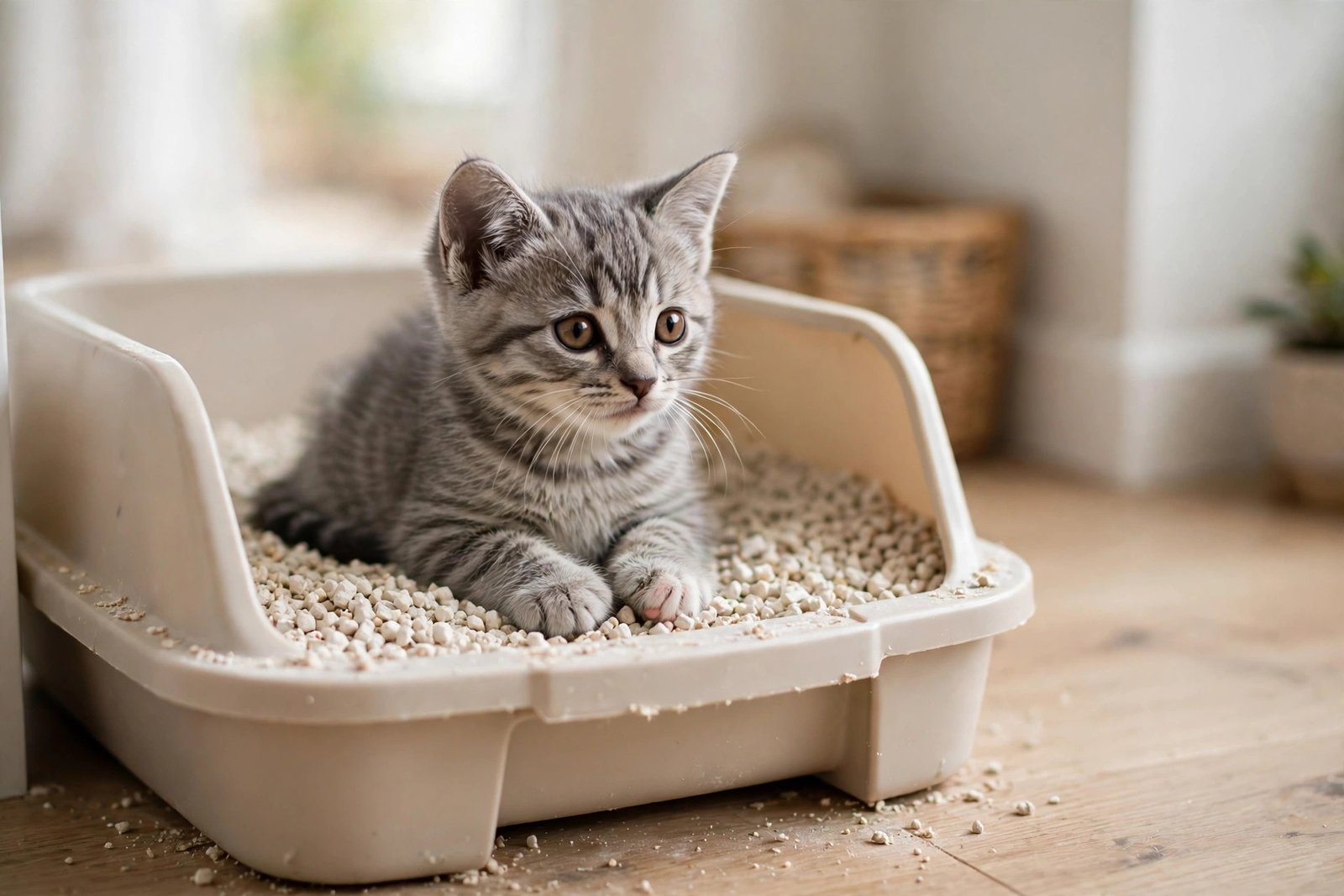
Bringing a kitten home is pure joy — until you find a puddle behind the sofa. The good news is that most kittens want to use a litter tray. Burying waste is a deep feline instinct, and a kitten that spent even a few weeks with its mother has usually watched her do it. If you want to know how to litter train a kitten fast, the honest answer is that speed comes from setup, not pressure. With a small room, the right tray, safe litter, and a simple after-meals routine, most kittens get the idea within a few days and are reliable within a week.
When Should You Start?
A kitten younger than three weeks cannot wee or poo on its own. Its mother stimulates it by licking its belly, and an orphaned bottle-fed kitten needs the same help from you: a warm, damp cotton ball rubbed gently over the area before and after every feed, until it wees after each meal and poos at least once a day. Do not put a newborn near a tray — it is not ready, and the litter itself is a risk.
From about three to four weeks, kittens begin to go on their own — this is the moment to introduce the tray. At four to six weeks they use it independently, copying their mother. By eight weeks, the age most kittens go to a new home, a healthy kitten should already understand the idea. Outdoor training should wait until the kitten is at least five months old, fully vaccinated, and neutered.
What You Need Before Day One
You need a kitten-sized tray with a low entry side — a baking tray or shallow cardboard box works for the first weeks — plus a small scoop, unscented non-clumping litter, a few puppy pads, an enzymatic cleaner, and some tiny treats. Keep the food and water bowls in a different corner from the tray. Cats dislike eating next to their toilet, and a tray beside the food bowl is one of the most common reasons a kitten avoids it.
Choose a quiet, warm room for the first few days — a bathroom or spare bedroom is ideal — and put the bed, food, water, and tray in it. A whole house is far too much territory for a small bladder. Confinement sounds strict, but it is the single biggest reason the fast method works: the tray is always a few steps away.
Choosing Safe Litter for Your Kitten
Some guides recommend clumping litter for kittens. Others, including feline welfare experts, say non-clumping only for young kittens — and they are right. Kittens explore the world with their mouths, and a kitten that eats clumping litter can form a solid lump in its gut that becomes a blockage. Non clumping litter for kittens passes through far more safely if swallowed, for the first two to three months. Once the kitten is reliably trained and past the mouthing stage, switch gradually by mixing the two over a week.
So what is the best kitten litter for a young kitten? Plain, unscented, non-clumping litter wins on safety, and it is cheap and easy to find. Scented litter is another trap: it smells pleasant to us, but a kitten’s nose is far more sensitive, and a strong fragrance can drive it away from the tray entirely. Fill the tray about two inches deep so the kitten can dig and cover, and avoid tray liners — kittens catch their claws in them.
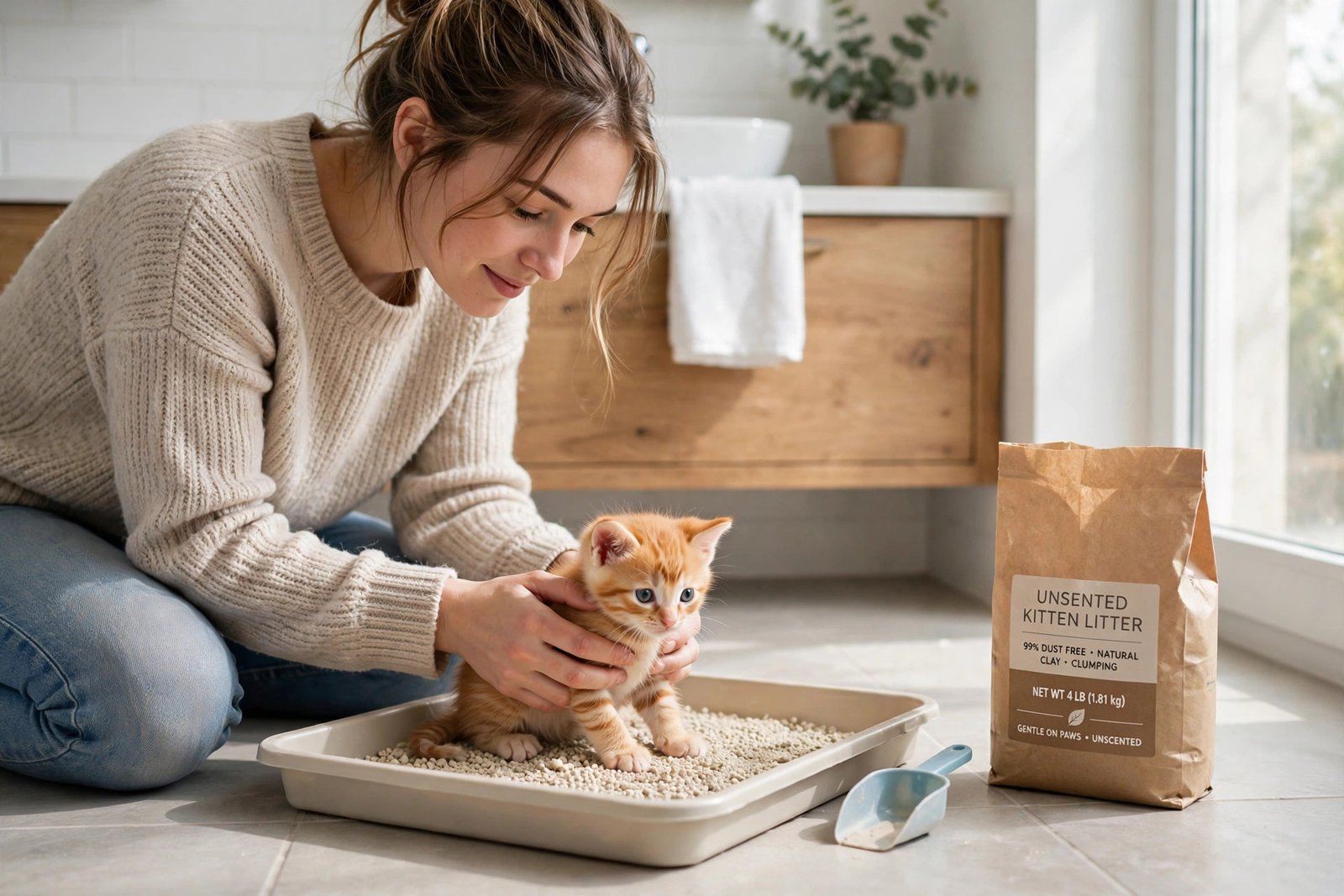
How to Litter Train a Kitten Fast: The 7-Day Plan
Day 1 — Show the tray. When the kitten arrives, carry it straight to the tray and set it down gently. Let it sniff, scratch, and climb out; do not hold it there or move its paws. Show it the tray again after its first meal, nap, and play session — these are the moments a kitten needs to go. If it uses the tray, praise it calmly and offer a tiny treat nearby, not in the tray. Never scold or rub its nose in a mess — punishment only teaches the kitten to hide from you.
Days 2–3 — Watch the signals. A kitten that needs to go will sniff the floor, circle, scratch at a corner, squat, or suddenly stop playing and crouch. The moment you see one of those cues, place it gently in the tray. Reading these signals is part of learning your kitten’s cat body language. If an accident happens, blot it up with a paper towel and drop the towel into the tray so the scent points to the right place, then clean the spot with an enzymatic cleaner — ordinary cleaners leave a scent that says “toilet here”, and some household disinfectants are toxic to cats.
Days 4–5 — Add space. Most kittens use the tray most of the time by now. Open the door to one more room, keep the tray in the same place, and add a second tray if the kitten has to travel far — the rule is one tray per cat, plus one extra. Scoop at least twice a day; a dirty tray is the most common reason a nearly trained kitten backslides.
Days 6–7 — Prove the habit. If the kitten has used the tray consistently for two full days, give it the run of the house during the day while you are home, and keep it in its room at night or while you are out. Still place it in the tray after meals and naps. If accidents restart, go back to one room for two more days — that is not failure, just a kitten that needs more time. Most kittens are reliable within a week. That is the real secret of how to teach a kitten to use the litter box quickly: a small space, a clean tray, and the same gentle routine, repeated without fuss.
The Eat, Play, Eliminate Routine
The fastest training is really just a timetable. Kittens eat, play, and then need the toilet, in that order, several times a day. Build the tray into the cycle: meal, then tray, then play; nap, then tray; play, then tray. Keep feeding times regular, because a regular schedule produces predictable toilet times, and always keep fresh water available. Keep the routine the same for the first two weeks — consistency turns a good day into a trained kitten.
Where to Put the Litter Box
Place the tray in a quiet corner the kitten can reach without crossing a noisy room or passing a washing machine. Keep it away from food and water, away from the bed, and somewhere the kitten will not be startled mid-use. An open tray is best for kittens: covered boxes trap smells, feel like a trap, and are hard for a small animal to enter. Self-cleaning boxes are a bad idea too — the noise and movement can frighten them. In a multi-cat home, give the kitten its own tray and spread trays around the house, so a nervous kitten is never cornered.
How to Keep the Litter Box Clean
Scoop solids and clumps at least twice a day, morning and evening at minimum. Top up the litter to keep the depth at about two inches. Once a week, empty the tray completely, wash it with hot water and a weak detergent, and refill with fresh litter. Never use strong-smelling disinfectants, bleach, or phenol products, which are toxic to cats. A little soiled litter left behind after a routine clean actually helps, because the familiar scent tells the kitten where to go.
Kitten Not Using Litter Box? Troubleshooting
A kitten not using litter box is the most common complaint in the first month, and it almost always has a fixable cause — kittens do not act out of spite.
| Problem | Likely cause | Fix |
|---|---|---|
| Goes next to the tray | Tray too small, sides too high, or too dirty | Larger low-entry tray; scoop twice daily |
| Goes in one favourite corner | That spot feels safer or smells of past accidents | Move a tray there; clean with enzymatic cleaner |
| Uses the tray sometimes only | Too much house access too soon | Back to one room for a few days |
| Suddenly stops using it | Litter changed, tray moved, new pet or visitor | Return to the old litter and tray spot |
| Cries or strains in the tray | Pain, constipation, or urinary trouble | See a vet the same day |
| Eats the litter | Young kitten exploring | Use non-clumping litter; ask the vet if it persists |
The pattern to notice is change: a kitten that was trained and then stops is telling you something changed — the litter, the tray’s location, the household, or its health. Fix the change first. Stress is a major factor in the first weeks, so give the kitten a quiet room and limit visitors. It is also worth learning how long you can leave a kitten alone — a kitten left too long in a big house will have accidents simply because the tray was too far away.
Orphan Kittens and Special Cases
Orphaned kittens need a different start. Below three weeks, they cannot eliminate alone, so stimulate them with a warm damp cloth before and after every feed. From about four weeks, place them in a very shallow tray after each feed, and put a used cloth in the tray as a scent cue. Be patient: these kittens missed the lessons a mother teaches by example, and they may take a week or two longer.
Kittens born outdoors need a bridge: mix a little untreated garden soil into the litter at first, then reduce it a spoonful at a time over a week or two. Kittens that will eventually toilet outside should still be trained indoors first, and only let out once they are at least five months old, fully vaccinated, and neutered.
When to Call the Vet
Most litter problems are training problems, but some are medical. Call the vet promptly if the kitten strains or cries while trying to go, produces blood in its urine or stool, goes far more often than usual, stops eating or drinking, or has a swollen belly. A kitten that suddenly starts going outside the tray after weeks of perfect behaviour also deserves a vet check before you change anything else. Watch for the wider signs of illness in cats too: hiding, lethargy, a dull coat, or a change in appetite alongside the toilet trouble.
Moving On: The Adult Tray and Litter
Once the kitten is confident, switch to a bigger tray with higher sides, around three to four months of age. Keep the new tray in the same spot for a week. To change litter type, mix the new litter in gradually over seven days — a sudden switch is one of the easiest ways to undo a month of good training. Keep the adult routine the same: one tray per cat plus one extra, scooped daily, washed weekly.
Frequently Asked Questions
How long does litter training usually take?
Most kittens understand the tray within a few days and are reliable within a week. Very young, orphaned, or nervous kittens can take three to four weeks, which is still normal. No progress at all after a month means a vet visit.
At what age should training begin?
Start at three to four weeks, when the kitten begins to go on its own. Kittens under three weeks need stimulation from their mother or carer and are not ready for a tray.
Which litter is safest for a young kitten?
Unscented, non-clumping litter. Kittens mouth everything, and non-clumping litter is far safer if swallowed. Avoid scented litter, and hold off clumping litter until the kitten is past the mouthing stage.
The Short Version
It is not a trick: a small room, a low tray, safe unscented litter, a visit after every meal and nap, calm praise when it works, and no punishment when it does not. Give the kitten a week of that routine and it will usually give you a trained cat in return.
