

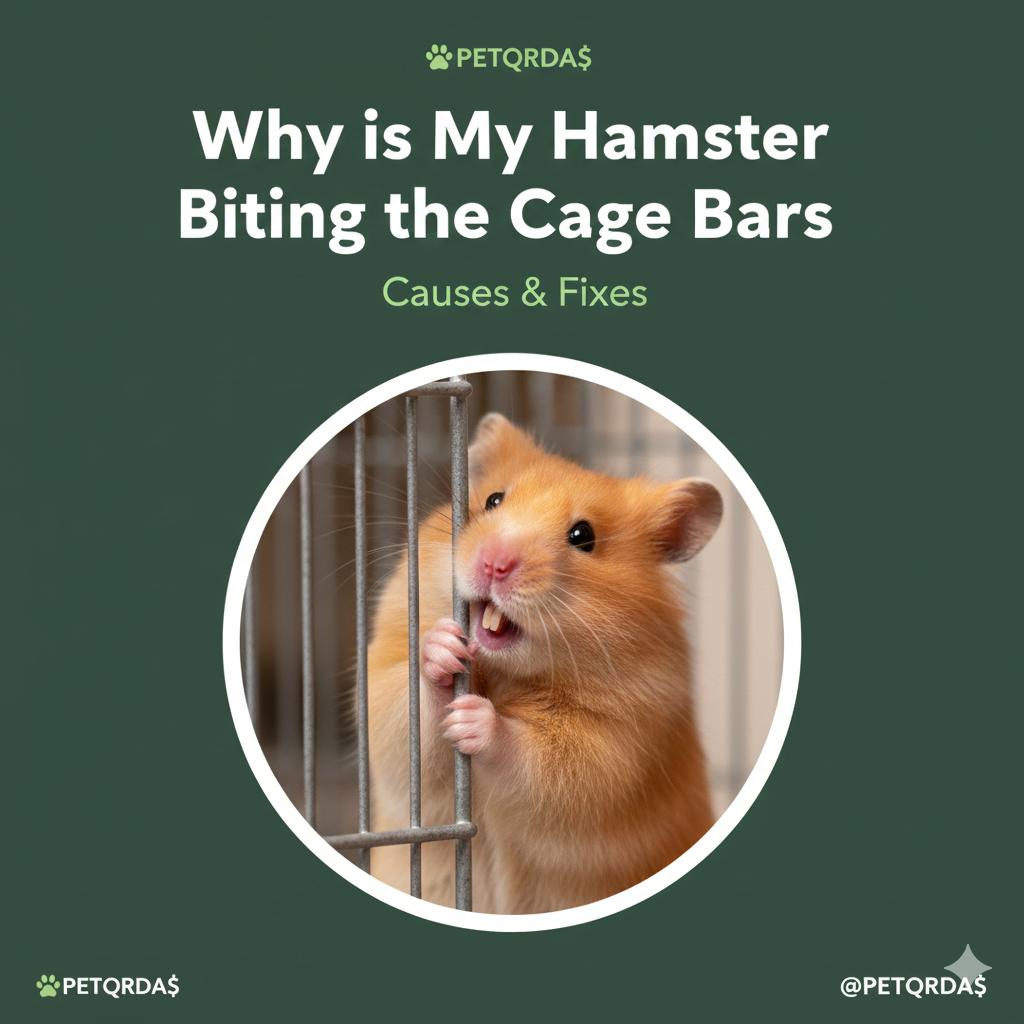
If you are a hamster owner, you’ve probably heard that loud, rhythmic “clink-clink-clink” in the middle of the night. It can be frustrating and even a bit worrying. You might be asking, “Why is my hamster biting the cage bars?” and more importantly, is it harmful? At PETQRDA$, we’re here to help you understand this common behavior and how to stop it.
Is Bar Biting Normal?
While common, biting cage bars (also known as “bar chewing”) is not exactly a natural or healthy behavior for hamsters. In the wild, they don’t have bars to chew on, so this habit usually signals that something in their environment needs to change.
4 Main Reasons for Bar Biting
- Boredom and Lack of Enrichment: Hamsters are high-energy animals. If their cage doesn’t have enough toys, tunnels, or a proper running wheel, they will chew the bars out of pure boredom.
- Cage Size (The “Cage Stress”): If the cage is too small, your hamster will feel trapped. Bar biting is often a sign of “cage stress,” where the hamster is literally trying to escape to find more space.
- Teeth Maintenance: A hamster’s teeth never stop growing. They need to chew on things to wear them down. If they don’t have enough wooden chew toys, they might turn to the metal bars instead.
- Attention Seeking: Believe it or not, some hamsters learn that making a loud noise with the bars gets their owner’s attention (and maybe a treat!).
How to Stop Bar Biting
- Upgrade the Cage: Ensure your hamster has a large enough enclosure (at least 450–600 square inches of floor space).
- Provide Chew Toys: Give them safe wooden blocks, apple sticks, or cardboard tubes to chew on.
- Add a Better Wheel: Make sure the wheel is silent and the correct size for their breed so they can burn off energy.
- Out-of-Cage Time: Let them explore in a safe playpen or a hamster-proofed room daily.
At PETQRDA$, we care about your small pets’ mental and physical health. Stopping bar biting early will prevent dental injuries and keep your hamster happy!
Leave a Reply