

Water is the essence of life, not just for us, but for our beloved companions too. Dehydration in pets can happen faster than you think, especially during hot summer days or after a bout of illness. But how to tell if your pet is dehydrated? Recognizing the signs early can be a lifesaver. At petqrdas.com, we’re committed to keeping your pets hydrated and healthy with these expert tips.
What is Dehydration in Pets?
How to tell if your pet is dehydrated? occurs when your pet loses more fluid than they are taking in. This leads to a dangerous drop in blood flow and a lack of fluids in their body tissues, which can damage their organs if not treated promptly.
5 Warning Signs of Dehydration
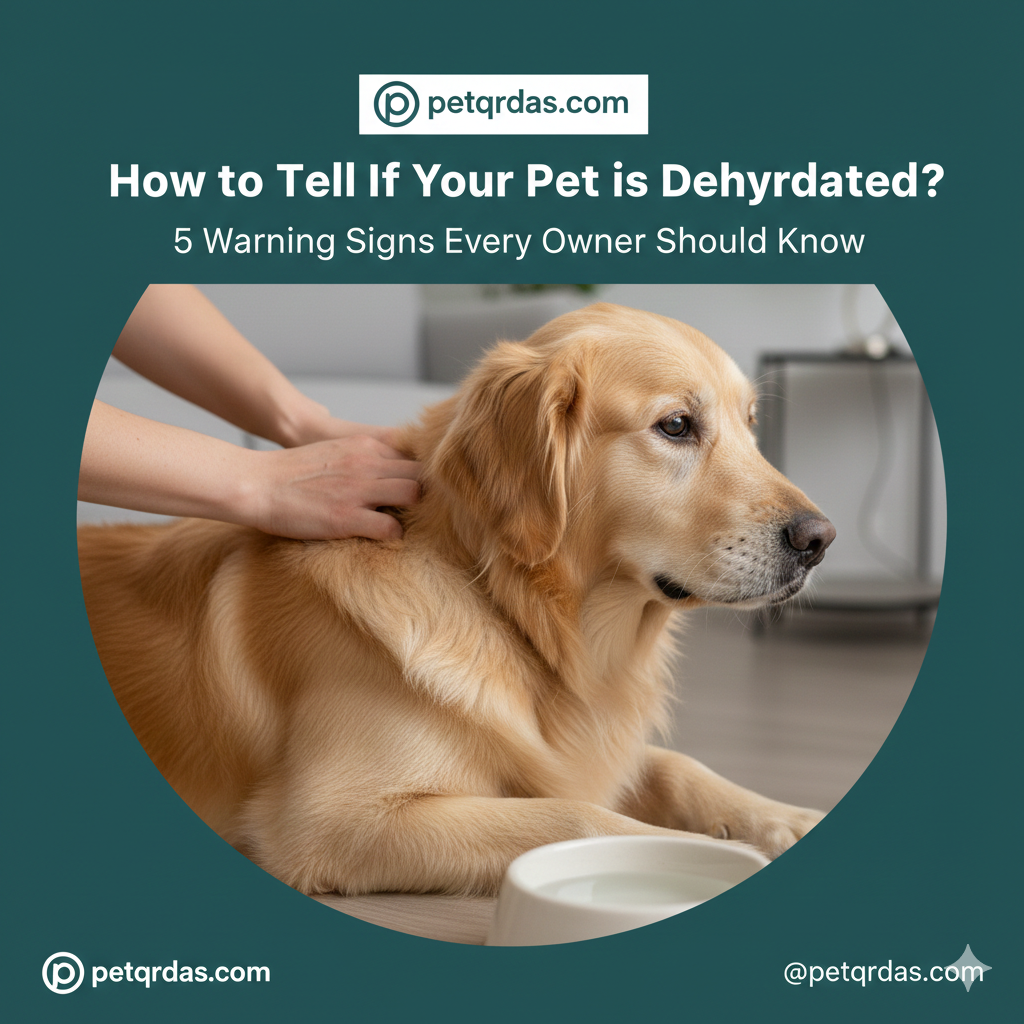
- The Skin Tent Test: This is the easiest way to check at home. Gently lift the skin on the back of your pet’s neck or between their shoulder blades. If the skin doesn’t snap back into place immediately and stays “tented,” your pet is likely dehydrated.
- Dry and Tacky Gums: Lift your pet’s lip and feel their gums. They should be moist and slippery. If they feel dry, sticky, or tacky to the touch, it’s a red flag.
- Sunken Eyes: Dehydration causes the fat pads behind the eyes to shrink, making the eyes appear sunken or dull. This is a sign of more advanced dehydration.
- Lethargy and Weakness: If your usually active dog or cat is suddenly moving slowly, seems exhausted, or is panting excessively even without exercise, their body is struggling due to a lack of water.
- Loss of Appetite: A dehydrated pet often loses interest in food. At petqrdas.com, we recommend monitoring their bowl closely; if they aren’t eating or drinking, action is needed.
Simple Ways to Prevent Dehydration
- Multiple Water Stations: Place fresh water bowls in different rooms.
- Keep it Cool: Change the water frequently, especially in warm weather.
- Wet Food Boost: If your pet is a picky drinker, adding wet food to their diet can increase their moisture intake.
- Ice Cubes: Many dogs love crunching on ice cubes, which is a fun way to keep them hydrated!
When to See a Vet
At petqrdas.com, we always advise: if your pet is vomiting, has diarrhea, or refuses to drink for more than 12 hours, don’t wait. Dehydration can quickly become a medical emergency requiring IV fluids.
Conclusion
Staying proactive is the best way to protect your pet. By knowing these signs, you can ensure your furry friend stays happy and hydrated year-round. For more life-saving pet health tips, stay tuned to petqrdas.com!
Leave a Reply