
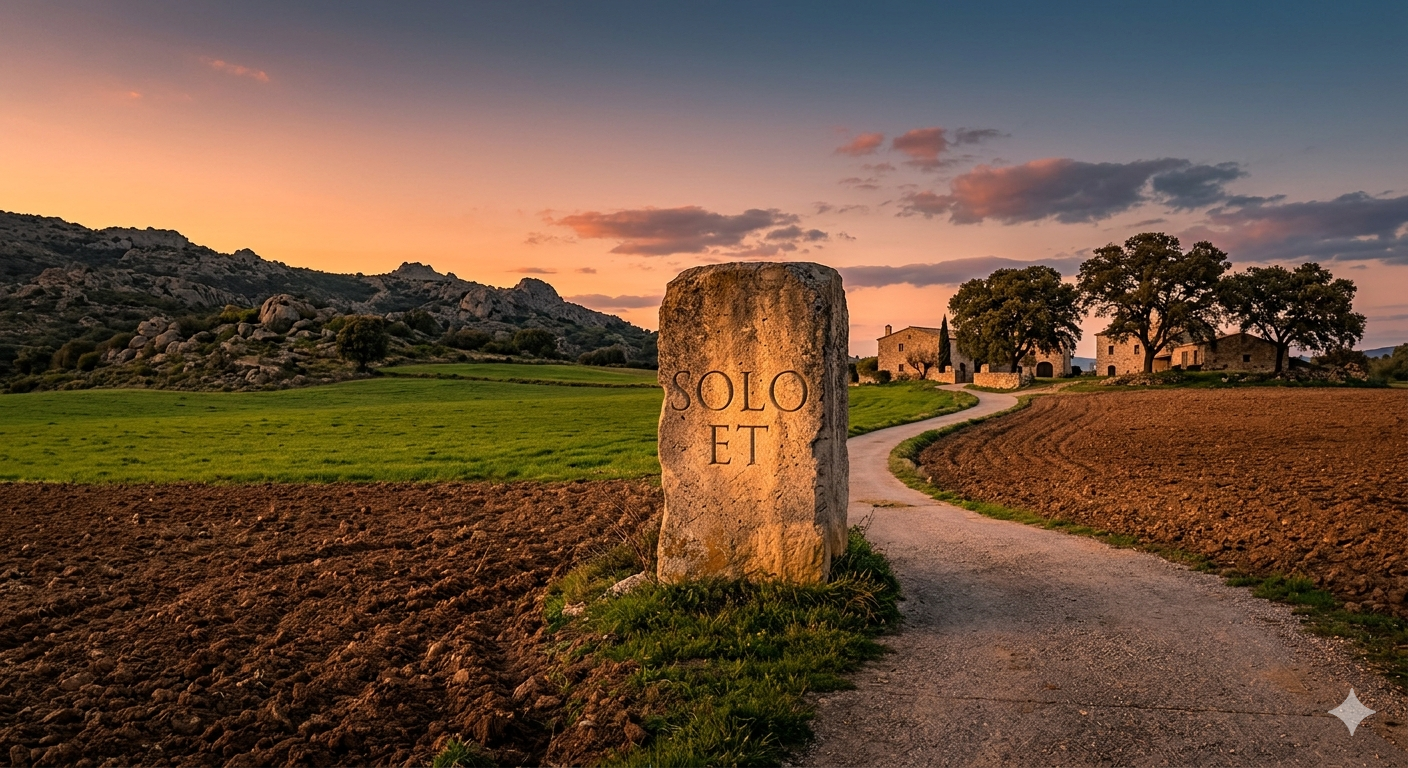
When you first encounter the term solo et, it might feel like a fragment of a forgotten language or a niche legal jargon tucked away in an old textbook. However, the phrase carries a weight that transcends simple translation. Rooted in Latin and branching out into modern legal, philosophical, and environmental frameworks, solo etc represents the foundational relationship between an entity and the ground it stands upon.
In this deep dive, we will explore the multifaceted layers of solo et, examining how it shapes our understanding of property, identity, and our connection to the physical world. Whether you are a legal scholar, a history buff, or someone curious about linguistic evolution, understanding the nuances of this term is key to grasping how we define “place” in the 21st century.
The Etymological Roots of Solo Et
To truly understand solo et, we have to look back at its linguistic DNA. In Latin, solum refers to the soil, the ground, or the foundation. When we use the phrase solo etc, we are often initiating a connection—literally translating to “soil and” or “ground and.”
In ancient Roman contexts, the land wasn’t just dirt; it was the basis of all legal standing. If you owned the soil, you owned everything attached to it. This “soil and” logic created a framework where the physical earth was the primary anchor for all subsequent rights and structures.
Why the Latin Foundation Matters
-
Stability: The ground is the most permanent asset a human can interact with.
-
Precedent: Most Western legal systems are built on Roman law, making solo et a silent partner in modern statutes.
-
Symbolism: It represents the starting point of any endeavor, whether architectural or intellectual.
Solo Et in Modern Jurisprudence
In the legal world, solo etc is most frequently linked to the maxim quicquid plantatur solo, solo cedit. This translates to “whatever is affixed to the soil belongs to the soil.” This principle is the bedrock of property law across the globe.
When a builder erects a skyscraper, or a farmer plants an orchard, the concept of solo et dictates who actually owns those additions. If the structure is permanently attached to the land, it becomes part of the land. This transition from personal property to real property is the essence of solo etc in a courtroom setting.
Key Applications in Property Law
-
Fixtures vs. Chattels: Determining if an item (like a chandelier or a fence) is part of the solo et (the land) or a movable object.
-
Mineral Rights: Historically, owning the surface meant owning everything down to the core of the earth, a direct extension of the solo et philosophy.
-
Easements: Defining how others can use your “soil and” the rights that come with it.
The Philosophical Dimensions of “Soil and Soul”
Beyond the dry language of law, solo etc touches on something deeply human. Philosophers have long debated the connection between a person’s identity and their geographic location. This is where the “and” in solo et becomes a bridge to the human experience.
If we view solo et as “soil and spirit,” we begin to see how land ownership and land connection influence our sense of belonging. In many indigenous cultures, the concept of solo et isn’t about owning the land, but being of the land. The ground isn’t a commodity; it is a relative.
The Psychology of Place
-
Rootedness: Humans often feel a psychological need for a “home base,” a specific piece of solo etc where they feel safe.
-
Displacement: The trauma of losing one’s land is often a loss of self, highlighting how integral the solo et connection is to mental well-being.
-
Legacy: We often plant trees or build monuments on a specific solo etc to ensure our memory outlasts our physical lives.
Environmental Ethics and the Solo Et Framework
In an era of climate change and ecological degradation, solo et takes on a new, urgent meaning. We can no longer view the “soil and” relationship as a one-way street of extraction. Modern environmental ethics suggest a “soil and sustainability” approach.
When we treat the solo et as a living organism rather than a static platform, our legal and social responsibilities shift. Regenerative agriculture, for instance, is a direct application of respecting the solo etc. It recognizes that the health of the “and” (the crops, the humans, the atmosphere) depends entirely on the health of the “solo” (the soil).
Protecting Our Foundation
-
Soil Health: Carbon sequestration depends on maintaining the integrity of the solo et.
-
Urban Planning: How we design cities on our solo etc dictates the heat index and water runoff of our environments.
-
Conservation: Legal protections for land are the modern equivalent of honoring the solo et principle.
Solo Et in Art and Literature
Artists and writers have frequently used the imagery of the ground to convey deep emotional truths. In literature, the solo et motif often appears when a character returns to their ancestral home. The physical contact with the earth serves as a catalyst for memory and character growth.
In visual arts, the “soil and” theme is explored through landscapes that emphasize the texture and permanence of the earth. Whether it’s a Dutch Master painting a stormy field or a modern installation artist using actual dirt in a gallery, solo etc remains a potent symbol of reality.
“To touch the earth is to touch the beginning of all things.”
This sentiment captures the heart of the solo etc experience—the realization that everything we build, dream, or create eventually traces its lineage back to the ground.
Technical Specifications: The Science of the Soil
If we look at solo et through a scientific lens, we see a complex ecosystem. Soil isn’t just “dirt”; it’s a mixture of organic matter, minerals, gases, liquids, and organisms that together support life.
The Components of Solo Et
| Component | Function in the Ecosystem |
| Minerals | Provide the structural base and essential nutrients. |
| Organic Matter | Acts as the “battery,” storing energy and supporting microbes. |
| Water/Air | Fills the pores, allowing roots to breathe and drink. |
| Microbiomes | The “and” in solo et—the living force that recycles nutrients. |
Understanding these technical aspects helps us appreciate why the solo etc is protected so fiercely in both law and environmental policy.
How to Apply the Solo Et Principle in Daily Life
You don’t have to be a lawyer or a geologist to find value in the solo et concept. By adopting a “grounded” mindset, you can improve your decision-making and your relationship with your surroundings.
Practical Steps for a Grounded Life
-
Mindful Interaction: Spend time barefoot on the grass. Reconnect with the literal solo et to reduce stress.
-
Sustainable Choices: Support local farmers who prioritize the health of their solo etc.
-
Home Ownership: If you own property, view yourself as a steward of that solo et, not just an owner.
-
Legacy Building: Think about what you are leaving behind on your “soil and” how it will impact future generations.
The Future of Solo Et: Space and Virtual Reality
As we look toward the future, the definition of solo etc is expanding. With the prospect of Mars colonization, legal experts are already debating how solo et principles will apply to extraterrestrial soil. Does the Roman maxim hold true on another planet?
Furthermore, in the digital realm, we see the rise of “virtual land.” While there is no physical soil, the solo et framework is used to create scarcity and value in the metaverse. Even in a world made of code, we find ourselves returning to the “soil and” metaphor to make sense of ownership.
Challenges of the Digital Soil
-
Lack of Permanence: Digital solo et can be deleted, unlike physical land.
-
Asset Valuation: How do we value “ground” that has no biological utility?
-
Jurisdiction: Who governs the solo etc of a server located in international waters?
Conclusion: Why Solo Et Matters Today
In conclusion, solo et is far more than a linguistic relic. It is a fundamental concept that ties our legal systems, our emotional well-being, and our environmental future to the very ground beneath our feet. By understanding the “soil and” relationship, we gain a clearer picture of our place in the world.
Whether we are protecting our backyard, litigating a property dispute, or simply taking a walk in the woods, the principle of solo etc reminds us that we are always connected to a foundation. It is a call to be mindful, a call to be responsible, and a call to stay grounded in an ever-changing world.
Frequently Asked Questions (FAQs)
1. What does “solo et” literally mean?
In Latin, solo et literally translates to “soil and” or “ground and.” It is typically used as a prefix or a foundational phrase in legal maxims to describe the relationship between the land and the things attached to it.
2. How is solo etc used in a legal context?
In law, it is most often seen in the phrase quicquid plantatur solo, solo cedit. This means that anything permanently attached to the land (like a house or a tree) becomes part of the land legally. This determines ownership and responsibility in real estate disputes.
3. Can solo etc apply to environmental conservation?
Absolutely. Modern environmentalists use the concept to emphasize that the health of our society (the “and”) is inseparable from the health of the earth (the “solo”). It advocates for land stewardship and the protection of soil biodiversity.
4. Does solo et have a spiritual meaning?
Many interpret solo et as a metaphor for being “grounded.” Philosophically, it represents the human need for a physical foundation and a sense of place, suggesting that our spirits are tied to the geography we inhabit.
5. Is the concept of solo etc relevant in the digital age?
Yes, it is being adapted for the “Metaverse” and virtual real estate. Although there is no physical soil, the rules of ownership, boundaries, and foundational value in digital spaces are often modeled after the historical solo et framework used in physical property law.
