
As a responsible pet owner, you want your furry, feathered, or scaled friend to live a long, happy life. But how do you ensure they are truly healthy on the inside? That’s where a regular “pet health checkup” comes into play. Just like humans need annual physicals, our pets need consistent medical attention to catch potential issues before they become serious. At petqrdas.com, we’ve compiled everything you need to know about preparing for and understanding your pet’s wellness exams.
1. What Happens During a Pet Health Checkup?
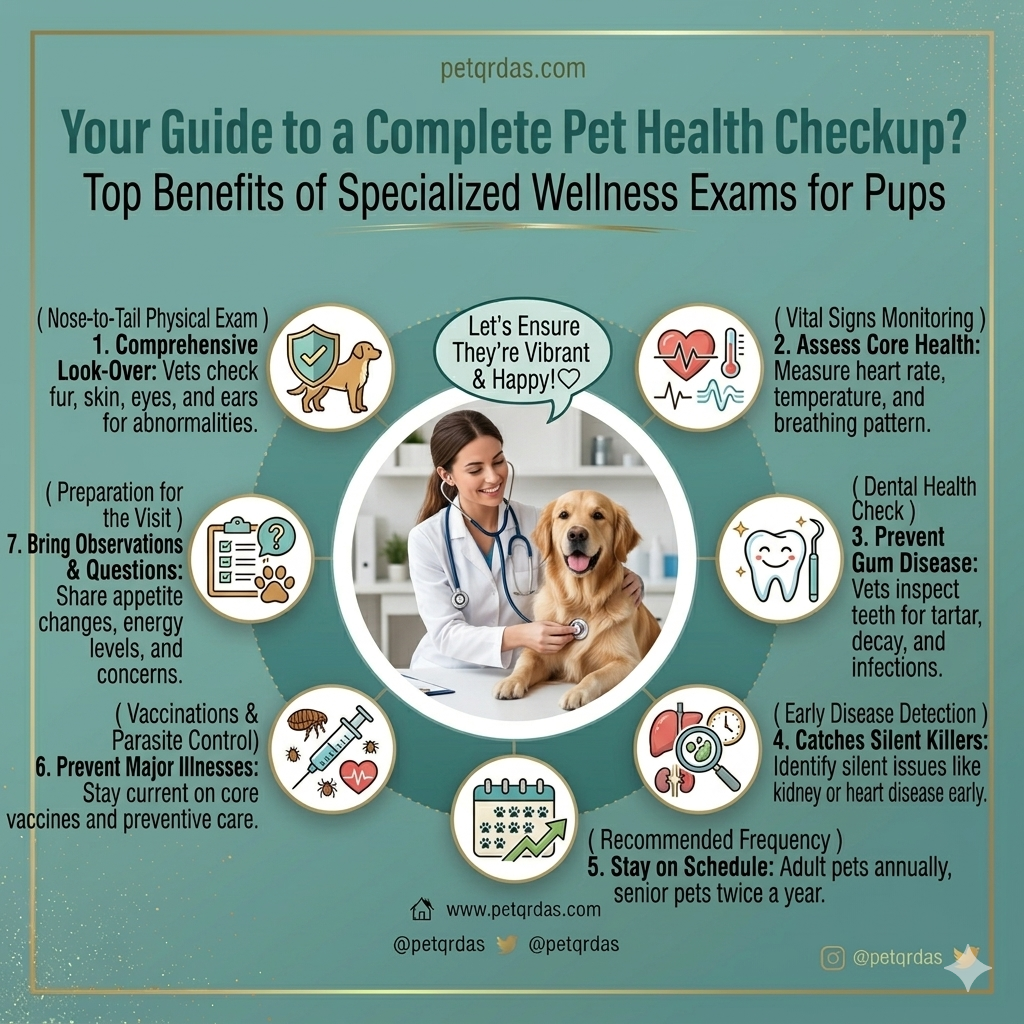
A routine “pet health checkup” is more than just a quick look-over. A professional veterinarian will typically perform a “nose-to-tail” examination:
-
Physical Exam: Checking the coat, skin, eyes, and ears for any abnormalities.
-
Vital Signs: Monitoring heart rate, breathing, and body temperature.
-
Weight Assessment: Ensuring your pet isn’t under or overweight, which can lead to joint problems or diabetes.
-
Dental Check: Looking for signs of gum disease or decaying teeth.
2. The Importance of Early Detection
Pets are experts at hiding pain. By the time they show symptoms, a disease might already be advanced. Regular “pet health checkup” visits allow vets to detect silent killers like kidney disease, heart murmurs, or early-stage tumors. At petqrdas.com, we believe that early detection not only saves your pet’s life but also saves you thousands of dollars in emergency medical bills.
3. Recommended Frequency of Checkups
How often should you take your pet to the vet?
-
Puppies & Kittens: Every 3 to 4 weeks for vaccinations and growth monitoring.
-
Adult Pets (1-7 years): Once a year is usually sufficient for a standard “pet health checkup.”
-
Senior Pets (7+ years): Twice a year, as their immune systems weaken and they become more prone to age-related issues.
4. Preparing for the Vet Visit
To get the most out of your “pet health checkup,” come prepared. At petqrdas.com, we suggest bringing:
-
Observations: Any changes in appetite, energy levels, or behavior.
-
Stool Sample: Often required to check for internal parasites.
-
Questions: Don’t be afraid to ask about diet, exercise, or new behaviors you’ve noticed.
5. Vaccinations and Parasite Control
A major part of any “pet health checkup” is staying up-to-date on preventative care. This includes core vaccinations (like Rabies or Distemper) and checking for heartworms, fleas, and ticks. Keeping these under control is the easiest way to ensure your pet stays vibrant and active.
Conclusion
A “pet health checkup” is the greatest gift you can give to your loyal companion. It provides peace of mind for you and a healthier future for them. Remember, a 30-minute visit today can add years to your pet’s life tomorrow. For more expert tips on keeping your pets in top shape, visit petqrdas.com today!
