
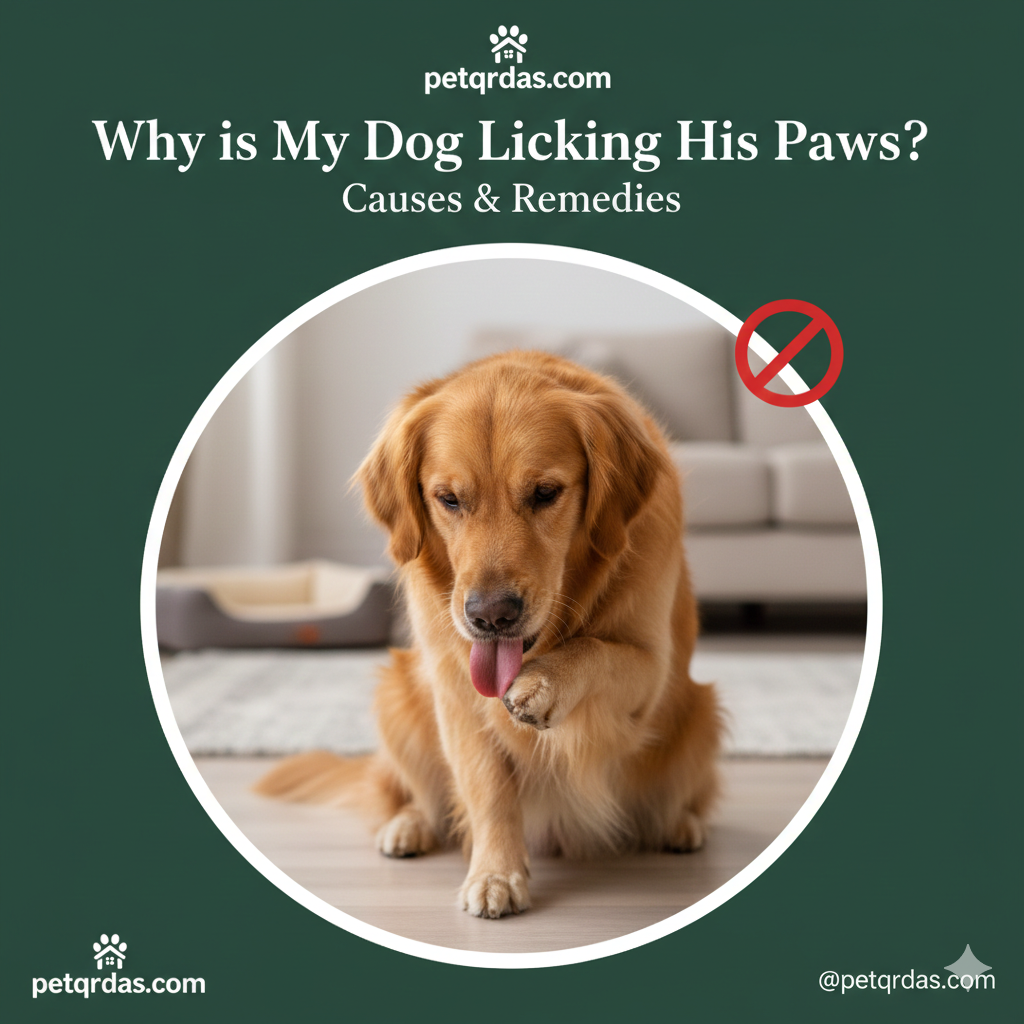
It’s a common sight for many pet parents: your dog sitting quietly, but constantly licking or chewing at their paws. While occasional grooming is normal, excessive licking can lead to red, irritated skin and even infections. If you are asking, “Why is my dog licking his paws?” you need to look closer. At petqrdas.com, we’re helping you identify the root cause of this itchy habit.
When Does Licking Become a Problem?
If your dog licks their paws so much that the fur is changing color (becoming rusty or brown) or the skin looks raw, it’s time to intervene. This behavior is usually a sign of discomfort rather than just cleanliness.
5 Reasons Your Dog Won’t Stop Licking Their Paws
- Environmental Allergies: Just like humans get hay fever, dogs can be allergic to pollen, grass, or dust. After a walk, these allergens stick to their paws, causing intense itching.
- Food Sensitivities: Sometimes, an ingredient in their diet (like chicken or beef) can trigger an allergic reaction that manifests as itchy paws. At petqrdas.com, we often recommend discussing an elimination diet with your vet.
- Boredom or Anxiety: Dogs often use licking as a self-soothing mechanism. If they are bored or stressed, they might lick their paws compulsively to calm themselves down.
- Dry Skin: Winter weather or low humidity inside your home can cause a dog’s paw pads to become dry and cracked. Licking is their way of trying to provide moisture.
- Injuries or Foreign Objects: Always check between the toes! A small thorn, a burr, or a tiny cut could be the reason your dog is focused on one specific paw.
How Can You Help Your Dog?
At petqrdas.com, we suggest these simple steps to provide relief:
- The Foot Wash: After walks, wipe your dog’s paws with a damp cloth to remove allergens.
- Interactive Toys: If the cause is boredom, use puzzle toys to keep their mind occupied.
- Consult a Professional: If you see swelling, a foul odor, or discharge, it’s time for a vet visit to rule out fungal or bacterial infections.
Conclusion
Persistent paw licking isn’t just a “quirk”—it’s your dog’s way of telling you something isn’t right. By identifying the trigger, you can help your best friend feel comfortable again. For more expert dog care guides, keep checking petqrdas.com!
