
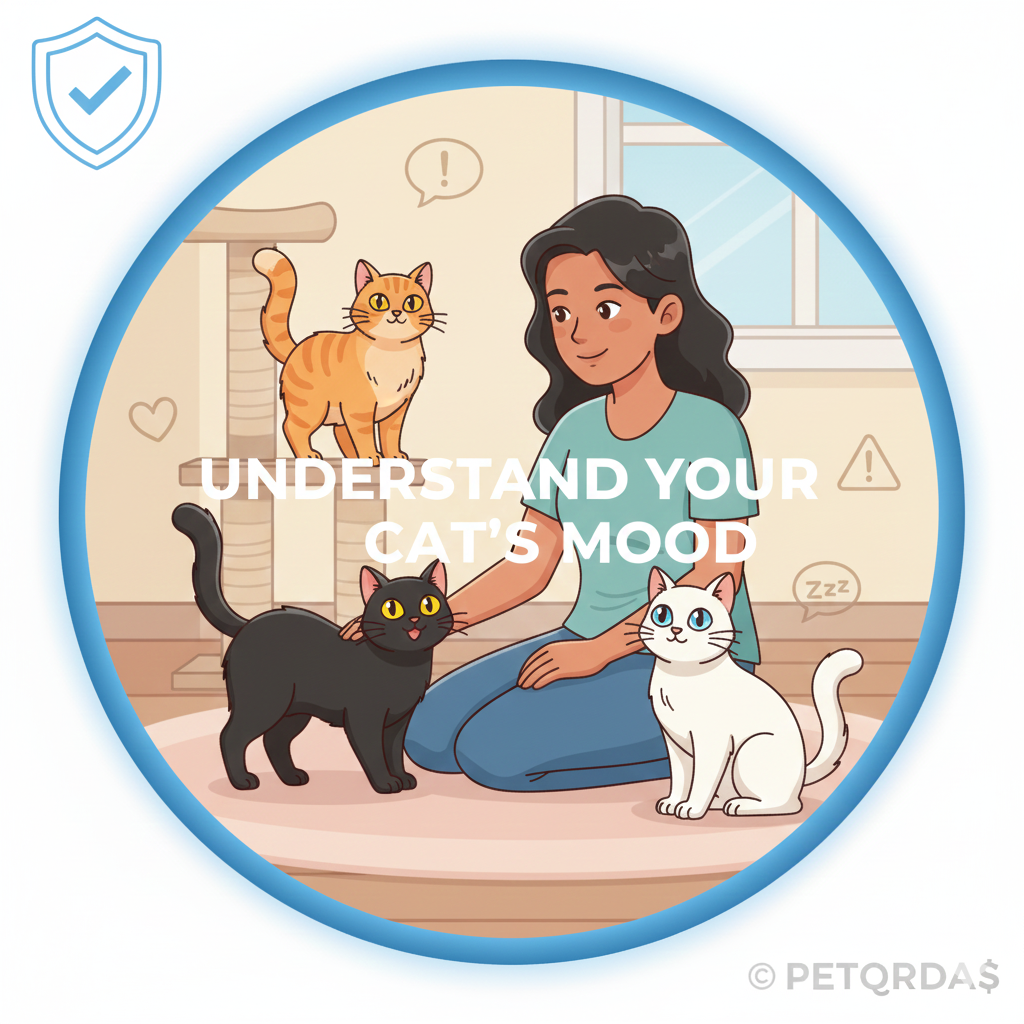
Cats are mysterious creatures, often leaving their human companions wondering what’s on their minds. Unlike dogs, cats communicate in subtle, nuanced ways. But what if you could understand every purr, tail flick, and ear twitch? At PETQRDA$, we believe a deeper understanding builds a stronger bond.
This ultimate guide will help you decipher your cat body language, transforming you into a true “cat whisperer” in no time!
1. The Tale of the Tail: A Feline Barometer
Your cat’s tail is perhaps its most expressive feature. It acts like a barometer for their mood:
- Tail Held High & Quivering: This is a sign of extreme happiness and affection. Your cat is thrilled to see you!
- Tail Low & Tucked Between Legs: Indicates fear or submission. Something has likely startled your cat.
- Tail Lashing Forcefully Side-to-Side: A clear warning sign of irritation or anger. It’s best to give your cat space in this situation.
- Tail Gently Swishing: Often means your cat is interested or focused on something, perhaps hunting a toy or prey.
2. Ear Positions: Listening to Their Mood
A cat’s ears are not just for hearing; they reveal a lot about their emotional state:
- Ears Forward: Signifies alertness and interest. They are paying attention to something positive.
- Ears Swiveling: Your cat is actively listening and trying to pinpoint the source of a sound.
- Ears Flattened Back (Airplane Ears): This is a strong indicator of fear, aggression, or irritation. Approach with caution.
- Ears Turned Sideways: Often seen during play or when they are feeling slightly annoyed.
3. Eye Contact & Blinks: The Language of Trust
A cat’s eyes can convey trust, aggression, or even playfulness:
- Slow Blink: This is the ultimate sign of trust and affection, often called a “kitty kiss.” Blink back slowly to show you reciprocate.
- Dilated Pupils (Big, Round Eyes): Can mean excitement, fear, or aggression. Look at other cues to understand the context.
- Narrowed Pupils (Slits): Often seen in bright light, but can also indicate aggression or intense focus.
4. Whisker Wisdom: A Sensory Antenna
Whiskers are crucial sensory tools that also reflect mood:
- Whiskers Forward: Signifies curiosity and alertness. Your cat is exploring or interested in something.
- Whiskers Pressed Back Against Face: A sign of fear or aggression, often when they feel threatened.
- Whiskers Relaxed: Indicates a calm and content cat.
5. Vocalizations & Body Posture: The Full Picture
Beyond individual parts, the overall posture and sounds are vital:
- Purring: Usually contentment, but can also be a self-soothing mechanism when sick or stressed.
- Hissing/Growling: A clear warning to back off. Do not ignore these signs.
- Arched Back with Fluffed Fur: A classic defense posture, trying to appear larger to an enemy.
- Rubbing Against You: Scent marking, claiming you as part of their territory, and showing affection.
Conclusion
Understanding your cat body language is a rewarding journey that deepens your connection. By paying attention to these subtle cues, you can better meet their needs and respond to their feelings. Continue exploring PETQRDA$ for more insights into creating a harmonious home with your feline friend.
